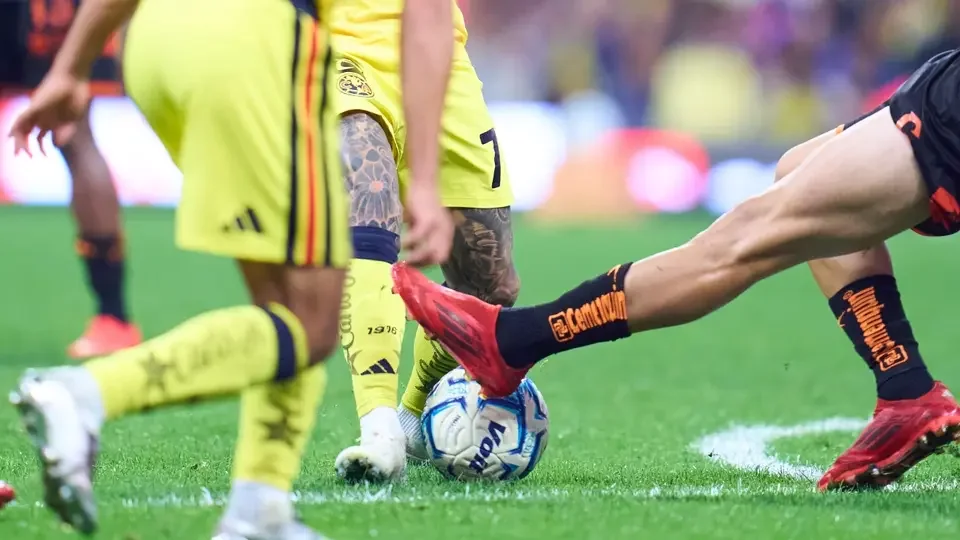
Alejandro Gómez's late red card against América became a bigger talking point because of what happened afterward. The Tijuana defender made a hand movement as he left the field following a VAR-reviewed challenge on Brian Rodríguez. América and Xolos finished their October 28, 2026 match level at 1-1.
Some coverage described a money-counting gesture; another account offered a different reading. The movement does not establish a payment, a corrupt decision or the player's intended message. Updated October 29, this guide separates the challenge, the reaction and any subsequent disciplinary decision, so supporters can follow the case without treating an interpretation of a short clip as a confirmed finding.
What happened at the end of América against Tijuana
Tijuana finished with ten players after a late challenge by Gómez on Brian Rodríguez was reviewed through VAR and resulted in a red card. The match was the rescheduled Jornada 7 fixture at Estadio Banorte on October 28. Its place in the schedule explains why a seventh-round game was being played during the closing stretch of the Apertura.
The goals had arrived much earlier. Elias Manoel put Xolos ahead and Miguel Borja equalized for América before halftime. The final score stayed 1-1 despite the dismissal. TUDN's match coverage and RÉCORD's report agree on the draw and the late sequence, although descriptions of the precise card minute vary. The reliable description is that it happened near the end.
Gómez is a Tijuana defender: the club's own player page lists him as number six and identifies his position as defense. Some reports use Jesús Gómez, while others use Alejandro Gómez. For following this incident, the club, shirt number and opponent are more useful identifiers than an isolated first name in a shared headline.
The card came before the disputed hand movement
The sequence matters. First came the challenge on Rodríguez. Then came the video review and the dismissal. The controversial hand movement was reported as Gómez walked away afterward. The original red card therefore should not be described as a punishment for a gesture that had not yet happened.
The later images gave television viewers something different to discuss from the tackle. A broadcast can show a departing player, a referee and a reaction in quick succession, but that editing does not supply the conversation between them or establish what each person saw. No account should manufacture words from the officials' headsets or the player's mouth to make the sequence fit a preferred explanation.
The timing also limits what the dismissal can explain about the result. It left Xolos short for the closing phase, when América were still looking for a winner. It cannot explain away goals scored much earlier, and the numerical advantage did not produce a second América goal. The match and the conduct afterward deserve their own assessment.
Supporters are consequently following two questions: whether the challenge warranted dismissal and whether the later action deserves any separate response. Answering one does not settle the other. A fan can dispute the tackle decision without knowing the intended meaning of the gesture, just as a disciplinary authority could examine later conduct without revisiting every earlier passage of play.
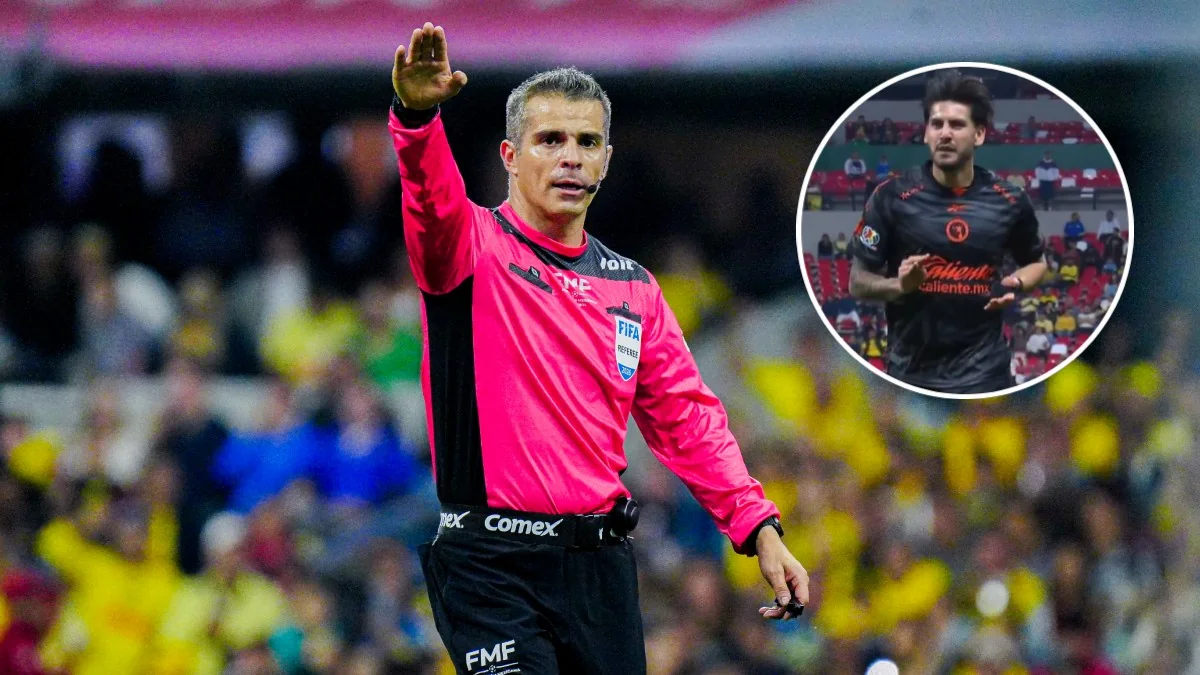
What the gesture does and does not establish
The hand movement is an observable action; its meaning is a separate question. A clip can show fingers moving without establishing the intended recipient, the message or the truth of anything a viewer thinks the player meant. Those distinctions are central to this case because the coverage itself offers different interpretations.
Different readings of the same clip
ClaroSports described Gómez as appearing to count bills while leaving the field. Its report also expressly said the player had not publicly explained the movement and that its recipient and intention were unconfirmed. Reporting the resemblance is different from reporting that Gómez admitted accusing anyone of taking money.
Juanfutbol's October 29 account described another interpretation: Gómez could have been illustrating contact in the challenge. It reported that commentator Andrés Vaca clarified his initial reaction. That is an attributed account of the broadcast discussion, rather than a statement from the player or a definitive disciplinary finding about what he intended.
Anyone revisiting the moment should therefore seek the fuller sequence and distinguish commentary from the player's own words. An isolated crop with a caption already describing corruption encourages the viewer to start with a conclusion. A different caption can steer the same movement toward an entirely different conclusion. Neither caption replaces the missing explanation.
A payment allegation needs evidence beyond a gesture
Even if the player eventually confirmed a money-related meaning, that would establish what he meant to communicate, not that a payment occurred. An allegation about a referee or club requires evidence of the alleged conduct. The reporting of this movement does not provide that evidence. A disputed red card is also not proof that the referee was paid to make it.
Conduct can nevertheless be assessed separately from the truth of an implied claim. A disciplinary question might concern an insulting action and its context; an integrity question would concern whether improper activity actually occurred. They need different evidence and should not be collapsed into one conclusion merely because the same clip provoked both conversations.
For a supporter explaining the controversy to someone else, precise language helps: Gómez made the movement; outlets interpreted it differently; no confirmed intention follows from those interpretations alone. That account leaves room to criticize the match decision or discuss the player's reaction while preserving the distinction between what the camera shows and what remains an inference.
Why touching the ball does not settle the red-card debate
Touching the ball is relevant to understanding a challenge, but it does not automatically make the challenge legal or rule out a sending-off. Some reporting of Gómez's tackle emphasized contact with the ball. A complete assessment also has to consider what the defender's action did to Rodríguez and whether it endangered his safety.
That is a rule question separate from the hand movement. Under IFAB Law 12, serious foul play concerns a tackle or challenge that endangers an opponent or uses excessive force or brutality. It does not require an admission that the defender intended to injure the opponent. Equally, a hard-looking collision is not automatically serious foul play.
The safety test for a challenge
The law distinguishes careless, reckless and excessively forceful challenges. Carelessness alone does not require a card; recklessness warrants a caution; excessive force or endangering safety can require a red. Those categories explain why the debate should address the manner of a tackle rather than stop at which player touched the ball first.
Useful replay questions include the speed and direction of the challenge, the point of contact, the position of the foot and studs, and the force carried into the opponent. Watching the whole movement also helps distinguish an unavoidable-looking finish from a player withdrawing a leg to reduce contact. These are assessment questions, not a claim that each factor proves this particular red card correct.
The available accounts do not provide a complete formal explanation of the officials' reasoning. Nor should a reader infer a medical diagnosis from Rodríguez's reaction or assume a lack of reported injury means a tackle was safe. Risk and actual injury are different matters. A still image can identify a position while leaving the intensity and timing unclear.
A potential direct red is reviewable through VAR. That procedural fact explains how a challenge can receive further examination; it does not establish bias when the decision changes. To assess this incident properly, supporters need the relevant replays and the stated basis for the sending-off, rather than a conclusion drawn from either the review's duration or the departing player's reaction.
As a general illustration, winning the ball cleanly and withdrawing from an opponent is different from touching it and continuing into a dangerous challenge. The phrase about getting the ball leaves that difference unresolved. A convincing argument for or against Gómez's dismissal should explain the action beyond the first touch.
Could the gesture lead to further disciplinary action
Further disciplinary action is possible if the relevant conduct and rule are established. That possibility does not mean an extra punishment has already been announced. The distinction is especially important here: interpreting an ambiguous movement is part of assessing the evidence, rather than an automatic trigger for a fixed number of suspension games.
The report and evidence matter after the dismissal
Being sent off does not make a player immune from consequences for later misconduct. IFAB's explanation of a further sending-off offence says officials report both offences without showing a second red card. The competition's disciplinary rules determine any suspension. Consequently, the absence of another card in a departure clip would not, by itself, settle whether later conduct can be considered.
The FMF's 2026–27 sanctions regulations address several kinds of player conduct, including actions against sporting behavior and disrespectful conduct. Article 17 allows action over specified offences whether or not officials noticed them. Article 18 deals with particular circumstances involving dismissed or suspended players and protests in areas such as tunnels. Walking toward the dressing room is not enough on its own to establish all those conditions.
Article 75 identifies material such as officials' reports, video and other evidence that can support disciplinary decisions. If an investigation is opened, the regulations also provide an opportunity for the parties to present arguments. A fair assessment needs the action, its context and the applicable provision; the popularity of a social-media interpretation is not a substitute for those elements.
Wait for the actual decision before counting suspension games
The sanction for the challenge and any finding about the later reaction must be identified separately before a total absence can be understood. A report saying the player faces a possible additional punishment is not the same as a notice imposing one. Nor does an article speculating that a case would be difficult establish that the player has been formally cleared.
When a decision appears, read the player's identity, the conduct found, the rule cited and the sporting sanction. Check whether the reported number refers to the dismissal alone, a separate incident or the complete outcome. That prevents a familiar mistake in football coverage: adding together two headlines that may describe the same punishment.
Comparisons with other players can be useful, but only when the circumstances match. A clear verbal insult, an admitted gesture and a movement whose meaning is disputed do not present identical evidence. The eventual decision should be evaluated through what the authority establishes, without promising either an extra ban or immunity before that determination exists.
What supporters should check next
As of the October 29 checks for this guide, no additional ruling about Gómez's gesture was identified in the FMF's disciplinary news index. That is a dated information limit, not a declaration that the player has been cleared. A later notice or a direct explanation could change what can responsibly be said about the reaction.
The most useful updates would answer different questions. A direct explanation from Gómez could clarify his intended meaning. A club statement could identify whether Tijuana is challenging the dismissal or responding to a separate matter. A disciplinary notice could establish the formal outcome. A news story quoting a possible punishment should not be mistaken for any of those documents.
Assess the football impact without rewriting the draw
The immediate football effect was a numerical disadvantage in the closing phase. A team with ten may have to cover wider spaces, change who protects the box or abandon an attacking outlet. Those are possible tactical choices after a dismissal, not a claim that Xolos used an unreported formation. They explain why even a late red card can matter in a game still level.
Any effect on a later lineup needs the actual disciplinary position and the coach's selection. Avoid naming a replacement as certain or counting several future absences from a speculative headline. Use the Liga MX fixtures this week to identify the next match, then check the club's team news and the relevant sanction notice for the players available.
The result against América remains a draw. An argument about a tackle or a possible case over a gesture does not itself revise the score or award points. Follow the current standings for the qualification race and the Liguilla guide for the knockout postseason. A disciplinary discussion and the competition table can develop at the same time without changing each other automatically.
When an old clip resurfaces, check its match date and context. This incident belongs to the October 28 make-up game from Jornada 7, rather than a fresh América–Tijuana meeting every time the video is shared. A later post can revive the discussion without reporting any new evidence or decision.
For the next update, keep three details together: who is speaking, when they spoke and what their statement actually changes. That approach leaves room for a serious football debate about the challenge and for scrutiny of the officials' explanation. It also keeps the central unresolved point visible: the reporting of the hand movement does not establish an improper payment or a confirmed intended accusation.
Comments
Comments are reviewed before publication.
Sign in with Google to comment. Spam, abusive content, personal information and policy-violating links are not published.
Sign in with Google to comment or reply.
Loading comments…