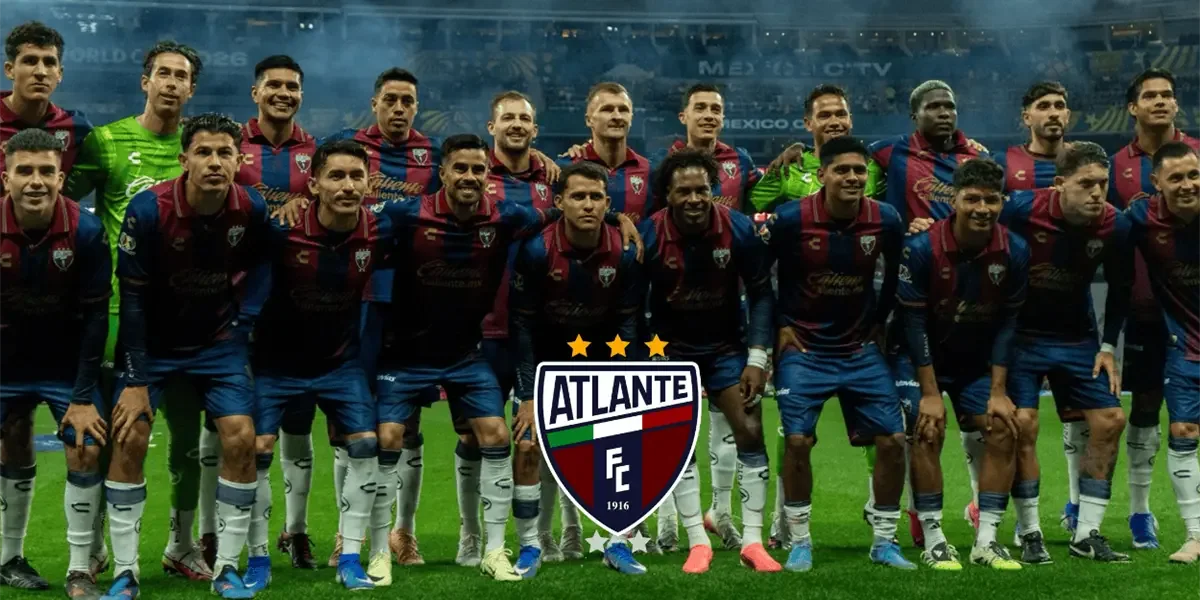
Atlante returned through a rights transfer, not sporting promotion
Atlante is back in Liga MX because its ownership acquired the top-flight rights associated with Mazatlán FC and the league’s owners approved the change. The Potros did not win promotion through a Liga de Expansión final or a promotion playoff. That distinction explains both the excitement around a historic club’s return and the discomfort over the method.
Liga MX owners approved the Mazatlán-to-Atlante move
The public trail began before the deal closed. In December 2025, Mazatlán presented the Liga MX owners’ assembly with a request to substitute its affiliation and registration rights after an agreement between Ricardo Salinas Pliego’s side and Emilio Escalante, Atlante’s owner. The request still had to satisfy closing conditions and federation requirements.
The decisive confirmation arrived in April 2026. Liga MX owners authorized the transfer, and Atlante announced that it would enter Primera División for Apertura 2026. An official Leagues Cup update later used the same sequence when it placed Atlante in the tournament: owners approved the transfer of Mazatlán’s franchise rights, so Atlante replaced Mazatlán in the Liga MX contingent.
This was therefore more than a rebrand declared by one owner. It required the competition’s ownership and federation process. It was also less than a sporting promotion. No result in the second tier automatically moved Atlante up while sending a bottom club down.
| Route | What decides it | Atlante in 2026 |
|---|---|---|
| Sporting promotion | Results plus the applicable promotion and certification rules | This was not the route used |
| Approved rights transfer | Commercial agreement, owners’ approval and federation formalities | This placed Atlante in Liga MX |
An affiliation certificate is the key to the transaction
“Affiliation certificate” sounds like paperwork because it is. In practical football language, it represents the federation-recognized registration and rights through which a club entity occupies a place in the organized competition. Transferring or substituting those rights can change which identity plays in the top flight, subject to approval.
It is not a championship, a ticket earned on the table or a document that turns every Mazatlán asset into Atlante property. The transaction’s sporting boundaries matter, especially for players and development teams, and they deserve separate treatment rather than the loose phrase “Atlante bought the whole club.”
For supporters tracking the new season, the result is straightforward: Atlante became one of the 18 Liga MX participants beginning in Apertura 2026. The broader competition framework is covered in our Liga MX 2026/27 season guide.
Why buying a place became Atlante’s route back
Atlante bought a route into Liga MX after proving itself repeatedly in a second tier that did not offer a working promotion reward. The closed sporting pathway helps explain the board’s decision. It does not turn the purchase into promotion, but it shows why the Potros’ owners stopped waiting for a staircase that had been removed.
The Potros spent 12 years outside the top flight
Atlante dropped out of Primera División in 2014 and did not return until July 2026. Twelve years is long enough for a fan base to watch an entire generation grow up without seeing the azulgrana shirt in a Liga MX table. It also made the return larger than an ordinary ownership transaction for supporters who followed the club through the second tier.
The history remained visible while the status changed. Atlante had won Mexican league titles in 1946-47, 1992-93 and 2007, plus two Concacaf championships. Those honors made the absence feel strange, especially when the club continued winning below. They did not create an automatic entitlement to a top-flight place; history is an argument for relevance, not a competition rule.
There were also more moves. The club that had represented Mexico City neighborhoods played in Cancún, returned to the capital and later used the Agustín “Coruco” Díaz in Zacatepec. Atlante’s supporters became accustomed to carrying identity across stadium changes, which is why “back in Liga MX” and “back in Mexico City” arrived as related victories.
Expansion titles did not open the promotion gate
On the field, Atlante built the résumé normally associated with promotion. Milenio counted three Liga de Expansión championships and a Campeón de Campeones during the 12-year absence. Yet winning those trophies did not send the club upward.
The structural reason dates to the pandemic period. Promotion and relegation were suspended for six seasons beginning in 2019-20. A Court of Arbitration for Sport media release later confirmed that the suspension ran through 2025-26. Atlante was among the clubs that initially appealed but then withdrew from that case.
That background creates the central tension. From the owner’s view, purchasing approved rights was the viable way to end an indefinite stay below. From the sporting view, the club entered without a decisive promotion match, and another city lost its team’s top-flight position. Both statements are true.
Supporters can follow what the Potros do with the opportunity on the Atlante Liga MX schedule. Results now provide the sporting verdict that the transaction itself could not.
What moved from Mazatlán and what stayed separate
The deal moved the Liga MX participation right from the Mazatlán project to Atlante. It did not simply place purple shirts, contracts, academy teams and a women’s squad on a truck to Mexico City. Reporting before the close described the affiliation certificate as the central asset and the sporting operations as separate.
Franchise rights changed hands, not an intact sporting operation
ESPN reported that the certificate negotiation did not include Mazatlán’s players, fuerzas básicas youth setup or women’s team. That is an important correction to the phrase “Atlante bought Mazatlán,” which can imply that the same roster continued under a different badge.
Atlante instead had to construct its top-flight project. Excelsior reported in March that the club was holding tryouts to build a women’s side, a requirement for a Primera organization, and was not planning around an automatic transfer of the Cañoneras roster. Individual players could still negotiate new contracts with Atlante or other clubs; that is normal recruitment, not the whole team moving through the certificate.
The private closing documents have not been made public, so it would be careless to declare every liability or registration that changed hands. The reliable distinction is narrower: the right to occupy the Liga MX place transferred, while credible reporting described the playing and development personnel as outside the basic certificate transaction.
Confirmed core transfer
Mazatlán’s franchise or affiliation rights, approved so Atlante could enter the top flight.
Reported as separate
The existing men’s roster, academy structure and women’s squad as an intact sporting operation.
Mazatlán lost a top-flight place and a local identity
For Sinaloa, the administrative distinction does not soften the outcome. Mazatlán supporters lost a Liga MX team after Clausura 2026. AS documented the women’s final home match at El Encanto and the approaching men’s farewell, moments that turned an ownership decision into empty future dates at a local stadium.
Mazatlán FC itself began through another identity change. Grupo Salinas moved Monarcas Morelia to Sinaloa in 2020 and created the purple Cañoneros brand. The team lasted six years, never built the deep history of Atlante and struggled for results, yet people still bought shirts, attended games, worked for the organization and formed memories around it.
That history makes easy jokes about Mazatlán having “no fans” miss the point. A club can be young and poorly run while still belonging emotionally to the supporters who showed up. Atlante’s restoration in Mexico City produced a real loss on the Pacific coast, just as Mazatlán’s creation had reopened old wounds in Morelia.
What Atlante’s new Liga MX chapter looks like
Atlante’s new chapter is recognizably azulgrana, but it is not a museum piece. Miguel Herrera is building a modern top-flight side in Mexico City, Estadio Banorte gives the club a vast home stage, and the schedule has restored rivalries that disappeared when the Potros went down. The emotional return arrived before the results did.
Estadio Banorte brings the club back to Mexico City
Atlante presented Herrera at Estadio Banorte in May and identified the venue as its home from Apertura 2026. Supporters will know the building by its historic name, Estadio Azteca. Its current commercial identity changes the sign; it does not change what the ground means to Mexican football or to a club that has spent years moving between cities and stadiums.
The fit carries history. Atlante played important periods at the Azteca and remains rooted in the capital’s popular neighborhoods even after spells in Cancún and Zacatepec. Sharing the huge venue with América puts the Potros back in the middle of Mexico City football. It also creates a practical challenge: a loyal but smaller crowd has to make an enormous bowl feel like home.
Herrera is a familiar bridge between eras. This is his third spell as Atlante coach, and N+ recorded him describing an ambitious team intended to compete immediately and give supporters football worth watching. That promise matters more than nostalgia once the whistle goes. Atlante must turn the romance of its return into points, organization and a clear playing identity.
The Necaxa opener revived the oldest rivalry
The first match back was staged away at Estadio Victoria on July 16. Necaxa was the ideal opponent because the clubs contest the “Padre de todos los Clásicos,” one of Mexico’s oldest surviving rivalries. La Jornada traces its roots to the 1930s and 1940s, when Atlante represented popular neighborhoods and workers while Necaxa was associated with electricians.
For 47 minutes, the return looked ready for a perfect headline. Eugenio Pizzuto struck from outside the area to score Atlante’s first Liga MX goal in 12 years. Julián Carranza then equalized from the penalty spot, and Miguel Pedroza delivered Necaxa’s winner deep in stoppage time after the officials reviewed the play. The final score was 2-1.
Defeat did not erase the night’s larger meaning. A fixture last played in 2011 was back on the calendar, Herrera was again on a Liga MX touchline, and young players who had waited in Expansion finally had top-flight minutes. That is what the transaction looks like in sporting terms: old symbols returned, but no free points came with them.
Coach
Miguel Herrera
Home
Estadio Banorte
First result
Necaxa 2-1 Atlante
Use the Atlante schedule for the next kickoff and the live Liga MX standings for the table context. Those pages answer the questions that change every week without locking a fast-moving rank into this guide.
Why supporters celebrate the return and still question the method
Atlante’s return can feel right and still expose something wrong. The Potros restored a century-old community to the first division, but the decisive qualification was an ownership transaction. Many supporters have room for both emotions: delight at seeing their club back and frustration that sporting achievement was not the route.
Atlante’s working-class identity survived relegation and moves
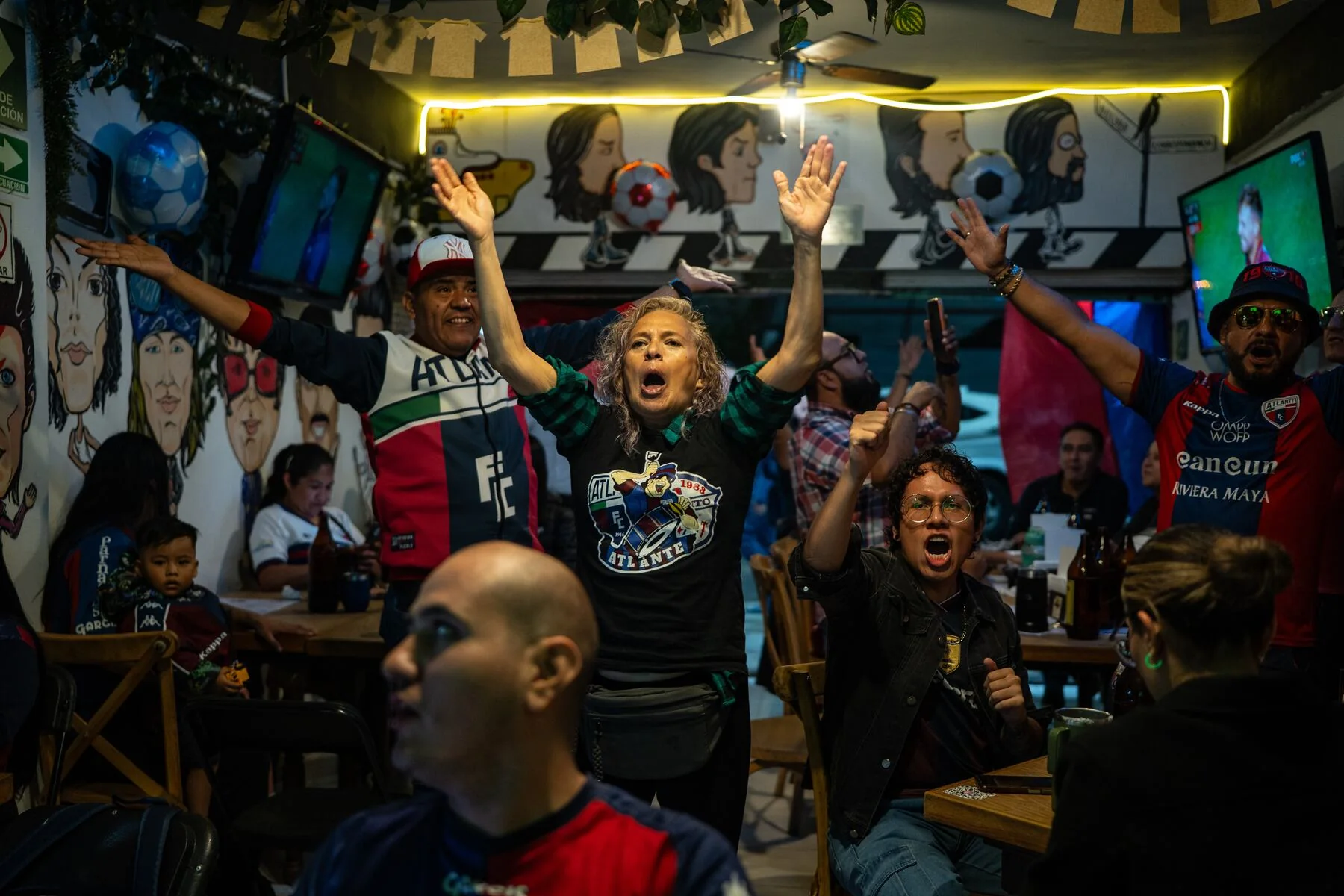
The “equipo del pueblo” label is more than a marketing line. Atlante grew from neighborhood football in Mexico City, associated with bakers, laborers and families who saw themselves in a club without an elite image. El País found that culture alive at Al son de la mordida, a six-table bar filled with old shirts, flags, children and supporters who stayed through the club’s years outside Primera.
That scene explains why a legal description of affiliation rights feels inadequate. Fans did not wait 12 years for a certificate. They waited to hear Atlante named in a top-flight kickoff, to recover city derbies, and to take parents or children to a match that connects different eras of the same family. The return validates their persistence even if it does not validate every rule that enabled it.
It also resists the idea that a club disappears when it leaves the television spotlight. Atlante survived relegation, a move to Cancún, a return to Mexico City, another temporary base in Zacatepec and seasons in a league with no promotion prize. Its identity lived in songs, shirts and gatherings before it regained a valuable place. Ownership made the transaction possible; supporters kept the subject of that transaction culturally alive.
The deal sharpens the argument over promotion and club ownership
The difficult question is not whether Atlante deserves affection. It is why winning in the second tier could not deliver the opportunity that buying an approved top-flight right did. Atlante’s three Expansion championships strengthened the sporting case for its return, yet capital and an owners’ vote determined the timing.
Club owner Emilio Escalante offered the institutional defense after the season began. He said his group had stabilized Atlante’s finances, funded the project privately and built something sustainable enough to present to the federation. Those are meaningful requirements for a professional club. They explain why owners considered Atlante a viable member, but they do not settle whether a financially qualified champion should have been able to rise through football results.
Supporters interviewed by El País made that distinction themselves. They celebrated the return and criticized a league without promotion and relegation because it weakens consequences at both ends of the pyramid. A large online discussion showed the same split in less formal terms: childhood memories and welcome messages sat beside objections to buying a place. That thread is a snapshot rather than a poll, but its contradiction mirrors the better-sourced fan interviews.
Mazatlán’s response matters too. Before the final exit, a principal supporters’ group said it would withhold season-ticket renewals while demanding clarity about the project. That was not resistance to Atlante’s history. It was a local fan base asking why its own relationship with a club could be changed by a deal negotiated above it.
A fair fan reading
Celebrate the Potros, scrutinize the mechanism, and remember the supporters who lost a top-flight team. Those positions fit together because they judge different parts of the story.
Atlante now has the chance to make its return mean more than a boardroom solution. Competitive football, a lively Mexico City home and investment in the men’s, women’s and youth sides can give the new place sporting substance. None of that rewrites the entry route, but it determines what the club does with it.
For dates that frame the rest of the campaign, use the Liga MX calendar. The fairest judgment will develop week by week: Atlante is unquestionably back, while the debate over how Mexican clubs should move between divisions remains open.
Comments
Comments are reviewed before publication.
Sign in with Google to comment. Spam, abusive content, personal information and policy-violating links are not published.
Sign in with Google to comment or reply.
Loading comments…