Liga MX player guide
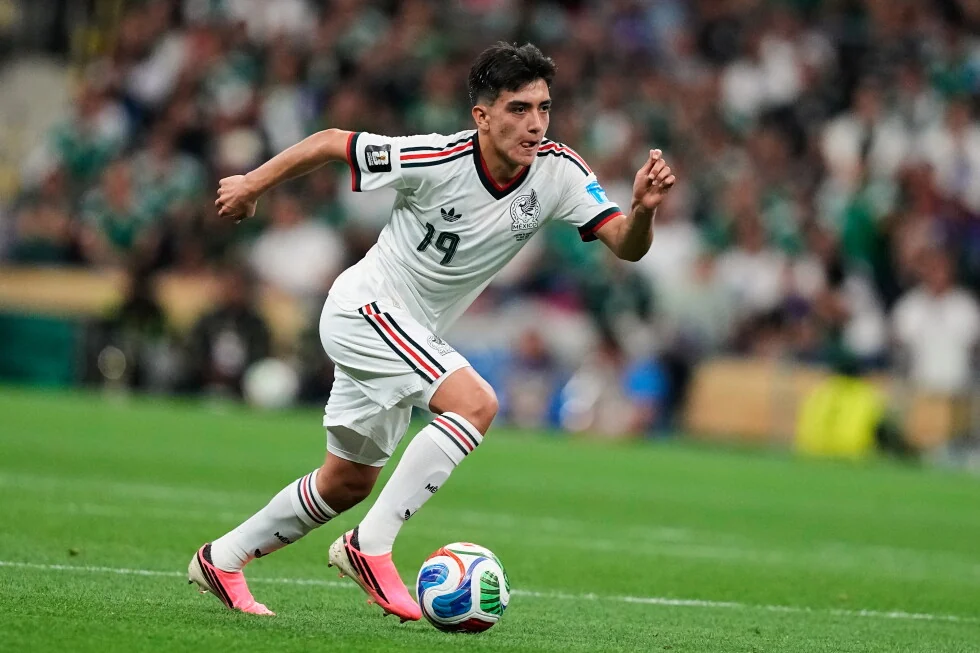
Gilberto Mora was already a Liga MX player before 2026. This was the year his job changed: Mexico trusted him at a home World Cup, Club Tijuana handed him the number 10 and every sharp touch began carrying national expectations.
Gilberto Mora’s 2026 Breakout Is a Leap in Responsibility
Gilberto Mora’s breakout is best understood as a jump in responsibility, not a sudden first sighting. He debuted in Liga MX in 2024 and entered 2026 with senior goals and a Mexico shirt already on his record. What changed was the size of the stage and the weight of the weekly assignment. At 17, he went from a fascinating Tijuana academy success to a player opponents prepare to stop.
The World Cup turned a Liga MX prodigy into a national reference
FIFA listed Mora as the youngest player in the entire 48-team World Cup field, at 17 years and 240 days when final squads were confirmed. That record created attention before he kicked a ball. His involvement in Mexico’s run to the round of 16 then changed the conversation. He was no longer a teenager included for experience; he became an option the coach trusted while the host nation’s tournament was alive.
That distinction matters. A gifted young player can dominate highlight clips without learning what happens after a bad pass, a physical duel or a tactical adjustment. World Cup minutes put Mora inside matches where one decision could alter a country’s summer. The Associated Press later singled him out as a Liga MX player to watch because Mexican supporters had connected with him during that run. He did not carry Mexico by himself, but he proved the occasion did not shrink his game.
Tijuana’s number 10 carries a different weekly demand
Nine days after FIFA announced the squads, Club Tijuana revealed a three-year agreement with Mora and said he would wear its number 10. The shirt does not guarantee creative freedom. It tells supporters, teammates and opponents where the club expects invention. A number 10 must keep asking for the ball after losing it, connect midfield to attack and decide when the game needs patience or acceleration.
Mora’s early Apertura return made that responsibility tangible. Opta’s live career page showed four goals in five 2026/27 Liga MX appearances and 368 minutes as of September 7. Those totals will move, so they should be treated as a snapshot rather than a final season line. Still, scoring at that rate immediately after a home World Cup is a strong response to the fear that attention might outrun performance.
The next level is repeatability. Tijuana needs Mora to help when the match is slow, when a low block denies his preferred space and when a road opponent targets him physically. Supporters can track the team on the Club Tijuana page and check the weekly Liga MX schedule. The attraction is no longer simply seeing whether the kid plays. It is watching how he handles being central to the plan.
Mora Reached Senior Football Long Before the 2026 Spotlight
Mora’s rise can look impossibly fast if it begins with the World Cup. The more useful starting point is August 2024, when Club Tijuana gave a 15-year-old an actual job in an actual Liga MX match. From there, his education was measured in defensive schemes, away grounds and short-turnaround weeks rather than youth-tournament promise.
A Liga MX debut at 15 accelerated the learning curve
Juan Carlos Osorio introduced Mora in the 83rd minute against Santos Laguna during Apertura 2024. Tijuana led, but the cameo was more than a ceremonial touch. Mora carried the ball past opponents and supplied Jaime Álvarez for the last goal of a 3–1 win. The first impression contained a theme that still defines him: he looked for the next productive action instead of protecting himself from a mistake.
He soon became the youngest scorer in Liga MX history. Records attract cameras, but senior repetitions are what shape a player. Opta’s career table credits him with 30 league appearances in 2024/25 and another 20 in 2025/26. Some were starts and some came from the bench, yet all forced him to read adult football: when to demand the ball, how to escape a second defender and how to recover his position after an attack breaks down.
That background changes how fans should read his current production. Mora is young enough to be eligible for age-group football, but his decisions are being trained in matches with playoff implications. Liga MX’s split seasons make every dropped point matter quickly. Readers new to that pressure can use the Liga MX standings guide to see why a late cameo can carry much more weight than its minute count suggests.
Mexico trusted him in a senior tournament at 16
The national team accelerated the lesson again. Tijuana’s official record lists Mora as Mexico’s youngest player in a competitive senior international and, after the 2025 Concacaf Gold Cup, the youngest player of any nationality to win a senior international tournament at 16 years and 265 days. FIFA’s feature at the time captured a teenager celebrating a trophy while already looking toward the 2026 World Cup.
A medal should not be mistaken for proof that a teenager controlled an entire tournament. Its value was exposure to a different kind of responsibility. International coaches have fewer training sessions, teammates interpret space differently and knockout matches leave little time to repair a poor decision. Mora learned to enter that environment before he was asked to perform in a World Cup hosted at home.
His path therefore has continuity. The debut at 15 introduced the speed of Liga MX. The Gold Cup at 16 introduced tournament football with Mexico. The World Cup at 17 combined both pressures under a far brighter light. That sequence is why his calm now feels earned rather than mysterious—and why the next stage should be judged by the quality of his choices, not by how many “youngest ever” lines can still be added.
What Makes Gilberto Mora Different on the Pitch
Mora is easy to enjoy because his best actions make a crowded pitch look briefly simple. He is a right-footed attacking midfielder who likes to begin toward the left, receive with the game in front of him and decide whether to combine, carry or attack the box. His gift is less about performing a trick than recognizing which defender can be moved by it.
He receives on the half-turn and sees the next action early
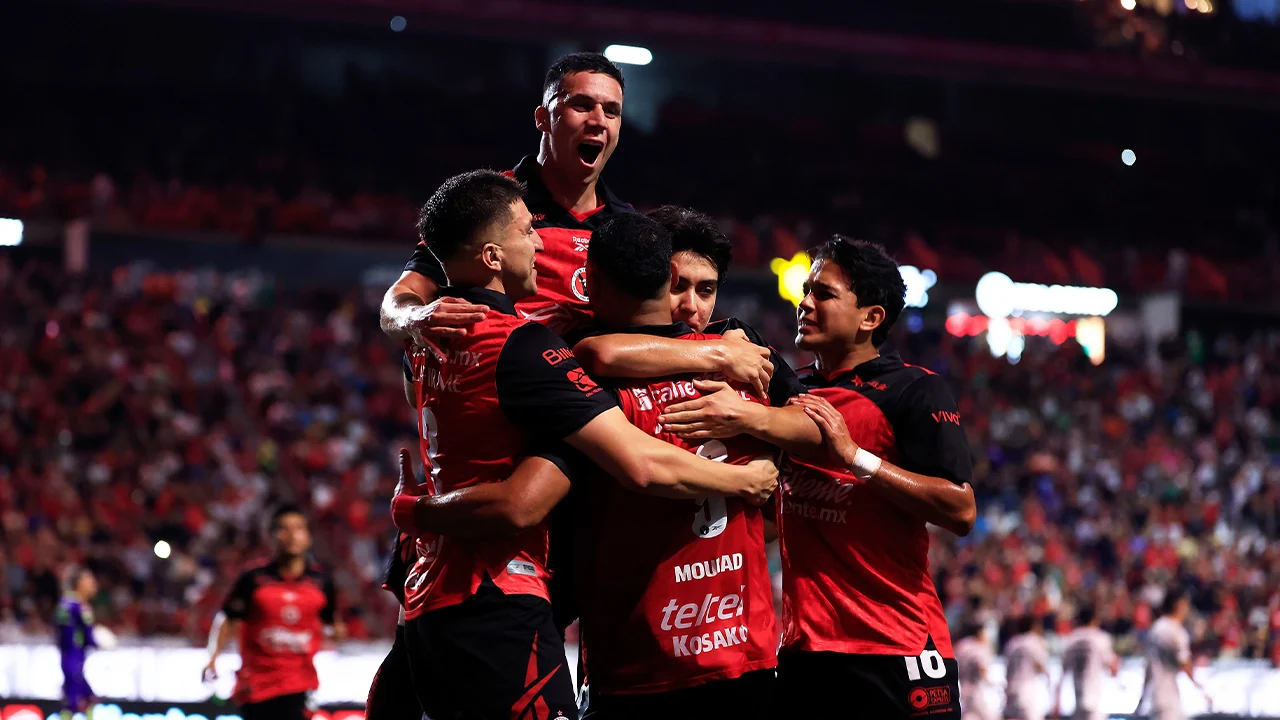
Watch his body before the pass arrives. Mora often stands at an angle rather than square to his own goal, checking the pressure over one shoulder and leaving his first touch a route toward the center. If the defender closes too quickly, a small feint or a sharp first step changes the line. If nobody follows, he can carry until a second opponent has to leave someone else.
Driblab’s 2025 analysis gives numbers to that impression. In the previous Clausura sample, Mora completed 90.4% of passes classified as high-pressure actions and had 7.34 carries per game; 55% of those carries met the provider’s progressive definition. Those are not 2026 season totals, but they explain the established tools behind the current excitement. He does not need to dominate the touch count to move an attack into a better zone.
His safe passing is part of the skill, too. Young creators are often encouraged to force the spectacular option because highlights reward risk. Mora can circulate the ball, move again and wait for the defense to reveal a better route. That patience makes the acceleration harder to read. It also allows him to play beside a striker, behind one or from an interior position without demanding an entire formation be built around him.
His scoring threat comes from timing as much as shooting
Mora’s goals should not be reduced to finishing. One of Driblab’s examples against Pachuca begins with him receiving deep after a clearance. He advances the attack, sends the left-sided runner into space and then stays connected as the defense moves. By arriving in the area after the first pass, he attacks a gap that did not exist when the move began.
That habit—pass, move, reappear—is why his scoring can survive even when opponents deny him long possessions. He can pull a midfielder toward the ball, release it and arrive beyond that player seconds later. His small frame may invite physical pressure, yet a low center of gravity, balance and awareness help him escape the first contact rather than wrestle through it.
There are still normal teenage inconsistencies. He can drift out when Tijuana cannot progress through his preferred zones, and aggressive teams can push him away from central combinations. The useful question is how often he finds another route into the match. Follow Tijuana’s place in the current Liga MX standings while watching for the same sequence: receive between lines, draw pressure, release the pass and keep running into the space he helped create.
The 2026 World Cup Showed He Could Handle the Stage
Mora’s World Cup mattered because his role grew while the tournament was happening. Mexico did not hand him five starts and ask the public to wait. He entered as the youngest player in the field, made a short first appearance, watched one match and then gave Javier Aguirre a reason to keep him in the lineup.
One substitute appearance became three starts
He made a brief cameo against South Africa and did not appear against South Korea. Against Czechia, with Mexico already qualified but its attack seeking more clarity, Aguirre changed the front line. Mora became the youngest Mexican to start a World Cup match, breaking a national mark that had stood since 1930.
The record was the headline; the football kept him on the field. In the sequence leading to Mexico’s second goal, Mora scanned forward and threaded a pass to Jorge Sánchez. The full-back’s collision with the goalkeeper left Julián Quiñones to finish. Associated Press reporting described Mora as the connection a sluggish attack had been missing in the 3–0 win. He helped speed the ball from thought to action.
Aguirre then started him against Ecuador and England. El País counted 215 minutes across Mexico’s 450 at the tournament. That is a meaningful workload without being the profile of an untouchable star. The progression is the evidence: one cameo became three consecutive starts because his first full opportunity improved the team’s possession in dangerous areas.
Ecuador and England revealed both his ceiling and his next lessons
El País identified Ecuador as Mora’s strongest game by the statistical rating it cited. That opponent offered an instructive test. Willian Pacho and Moisés Caicedo could close space with Champions League-level speed, yet Mora still found angles that opened routes for Mexico’s attackers. His technique remained available even when the time between receiving and being challenged became much shorter.
England ended Mexico’s run in the round of 16. A loss at that level does not erase the group-stage evidence, and an exchanged shirt with Jude Bellingham does not prove a future destination. The more valuable lesson was how hard it is for any creator to remain involved when an elite opponent controls territory, wins second balls and forces attacks to begin farther from goal.
For Mora, the next improvements are practical. He must keep offering an outlet after physical contact, press with the same concentration he brings to the ball and choose moments to accelerate when his team spends long spells without possession. Those demands are normal for a 17-year-old. What made the World Cup unusual was seeing him encounter them without hiding.
The tournament supplied a benchmark, not a graduation certificate. Each Liga MX week now asks whether the World Cup’s composure can be repeated against opponents who have studied his movements. The current match schedule is where supporters can watch that answer develop in real time.
Club Tijuana Is Giving Mora a Serious Development Test
Remaining at Tijuana is not a pause between the World Cup and Europe. It is a demanding weekly test with the ball, without it and under the attention that follows Mexico’s youngest World Cup player. The club has given Mora a featured role; Liga MX opponents now have video, physical matchups and specific plans for taking that role away.
Early Apertura production has raised the baseline
Mora scored the winning goal in Tijuana’s 2–1 victory over Cruz Azul on August 16. Two weeks later, Club Tijuana’s official report credited him with both goals against Pumas. The first came from the penalty spot in the 52nd minute, so the brace should not be dressed up as two pieces of open-play invention. It still required the number 10 to handle decisive moments and then remain involved.
Those goals sit behind Opta’s September 7 snapshot of four in five Liga MX appearances. The sample is small, yet it changes what counts as a good Mora performance. A clever turn and two promising passes are no longer enough on their own. Tijuana needs him to connect attacks, create shots and affect the score across different match states.
That expectation can expose weaknesses in a healthy way. When an opponent assigns a holding midfielder to screen his receiving lane, Mora must decide whether to drift wide, drop deeper or use his movement to free a teammate. When Tijuana leads, he has to protect the ball and understand risk. When it trails, he has to create urgency without treating every possession like the last minute.
Pubalgia makes workload management part of the story
Mora’s early 2026 was disrupted by pubalgia. February reporting described specialist treatment and uncertainty over the return date. His later World Cup and Apertura appearances establish that he returned to competition; they do not prove that a teenage body should be asked to play without limits.
Load management is often discussed as if rest and ambition are opposites. For a 17-year-old, adaptation is part of performance. Training volume, travel, hard surfaces, rapid changes of direction and repeated national-team camps all add stress. Tijuana’s staff has information supporters do not, so a planned substitution or managed training week should be assessed in context rather than automatically read as a setback.
The sensible target is availability across the full tournament. Supporters can compare Mora’s minutes with Tijuana’s position in the Liga MX standings and the congestion on the weekly fixture list. The best development environment is the one that gives him meaningful problems to solve while keeping him healthy enough to face the next one.
Europe Can Wait Until the Football Gives a Clear Answer
European interest is a natural consequence of Mora’s age, production and World Cup visibility. It is also the least useful part of his story until a club makes an official agreement. Tijuana has created a route for a future move; Mora’s football should decide when that route is worth taking.
A new contract creates choice rather than a forced exit
Club Tijuana announced a three-year contract with what it called a customized, clearly structured exit mechanism. That wording matters. It protects the club that developed him while recognizing that his next level may eventually be abroad. It does not reveal a public fee, identify a buyer or turn every report about a major club into a completed negotiation.
El País reported after the World Cup that the agreement allows an overseas move when an appropriate offer arrives. “Appropriate” should include more than money. A buying club needs a credible plan for first-team minutes, physical development and a position that uses Mora’s ability to connect attacks. Collecting him for a large academy or loan network would not automatically improve on being Tijuana’s number 10.
Mora turns 18 on October 14, 2026, which will create another wave of headlines. The birthday is a legal and administrative marker; it is not a football deadline. The right move can happen later if regular Liga MX minutes continue teaching him how to solve low blocks, pressing traps and matches in which his team has less of the ball.
The next six months should be judged by repeatable habits
Supporters do not need a club analyst?s tools to track his development. Start with availability: can he train and play consistently after the pubalgia interruption? Then watch repeatability: does he find ways to contribute when the first dribble is stopped or the left half-space is crowded?
- Influence: chances, goals and useful progression across several match types.
- Decisions: safe circulation when required and acceleration when the gap appears.
- Off-ball work: pressing cues, recovery runs and movement after releasing a pass.
- Resilience: response after contact, a quiet half or an opponent’s tactical adjustment.
Those habits travel better than a hot scoring streak. Fans can keep the evaluation grounded by following the Club Tijuana team page and understanding the pressure of each match through the Liga MX standings explainer. Mora’s 2026 breakout has already happened. The next question is whether each month adds a new solution to his game, wherever he eventually plays it.
Comments
Comments are reviewed before publication.
Sign in with Google to comment. Spam, abusive content, personal information and policy-violating links are not published.
Sign in with Google to comment or reply.
Loading comments…