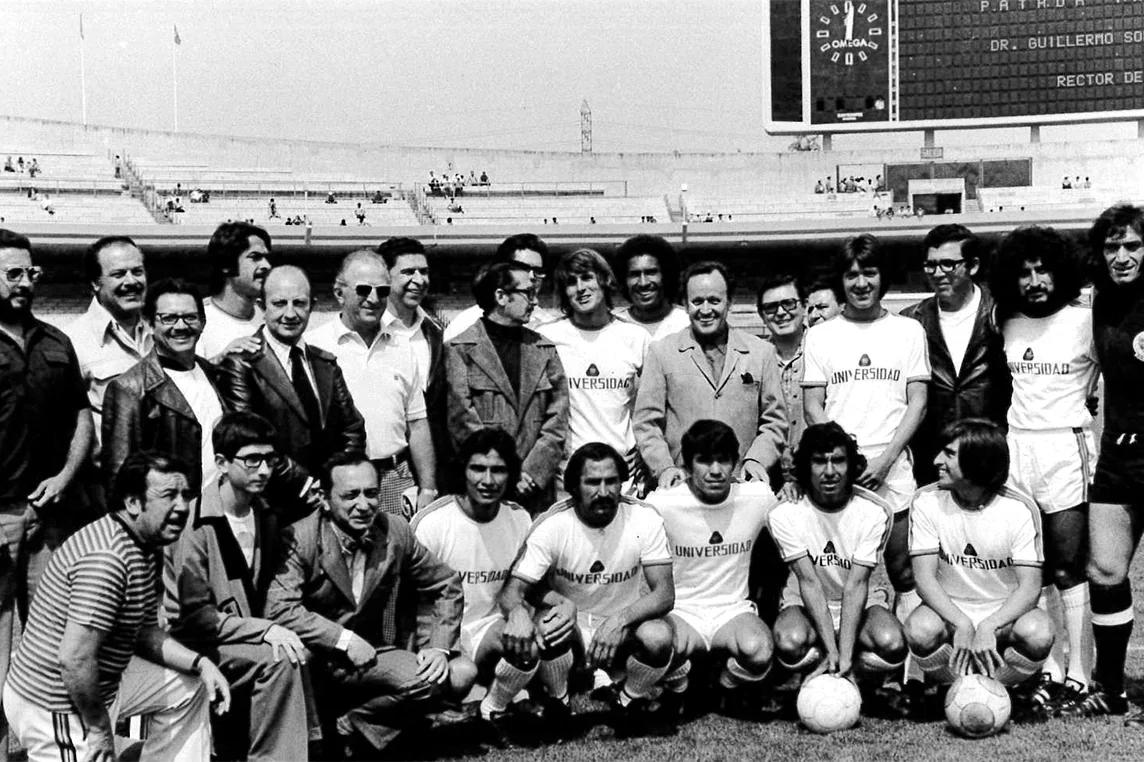
Cabinho leads the all-time Liga MX scoring list
Evanivaldo Castro, known throughout Mexican football as Cabinho, is the all-time leading scorer in Mexico's top division with 312 league goals. Carlos Hermosillo follows on 294, Jared Borgetti on 252 and José Saturnino Cardozo on 249. Those four retired forwards provide the clearest starting point for understanding the record: sustained production across a career, rather than a single Golden Boot or a spectacular tournament.
The established leaders and their league totals
| Position | Player | League goals | Historical distinction |
|---|---|---|---|
| 1 | Cabinho | 312 | Overall benchmark |
| 2 | Carlos Hermosillo | 294 | Leading Mexican scorer |
| 3 | Jared Borgetti | 252 | Santos Laguna icon |
| 4 | José Saturnino Cardozo | 249 | Toluca's great finisher |
The table uses the historical first-division series, including the competition before its Liga MX branding. Starting the count only when the modern name appeared would remove the careers that created the record. The gap between Cabinho and Hermosillo is 18 goals; between Borgetti and Cardozo it is just three. That close contest for third should not obscure how different their careers were, especially their relationships with individual clubs.
What counts as a Liga MX goal
Here, league goals include the regular phase and the Liguilla, the championship playoffs. They exclude domestic cups, Concacaf competitions, the Copa Libertadores, friendlies, national-team matches and goals in other countries. A penalty scored during a match counts; a successful kick in a deciding shootout does not become an individual match goal.
The RSSSF historical compilation states that league-and-playoff scope explicitly. It is especially useful because a club's tribute might celebrate every competition while a statistics page might show only Apertura matches. Both can be accurate and still answer different questions. The retired top four are shown here without attaching an unverified current total to a moving active-player list.
For the players scoring this weekend, use the Liga MX games today page. A tournament scoring race and the career record belong beside each other, but they should never be silently combined.
Why Cabinho's record belongs to more than one club
Cabinho's 312 is a league-wide career record, built with Pumas, Atlante, León and Tigres. Remembering him only as a Pumas striker misses a central part of the achievement: he kept scoring after changing teams. A club legend can dominate one stadium; Cabinho carried his production into different dressing rooms and different stages of his career.
That distinction also explains why an individual scoring record is not a league-title table. A forward can lead the scoring charts while another club wins the championship. His finishing still counts when his side loses a final or misses a trophy, just as a championship medal does not prove that its owner scored more goals than every opponent. Supporters weighing the greatest striker should decide whether they mean finishing, longevity, decisive matches or team honours.
Pumas, Hugo Sánchez and the shared scoring crown
The Pumas history places Cabinho among the central figures in the club's first league championship, in 1976–77. The same era introduced Hugo Sánchez to the senior stage. In 1978–79, they shared the scoring title with 26 goals each, a striking reminder that two outstanding finishers do not have to cancel one another out.
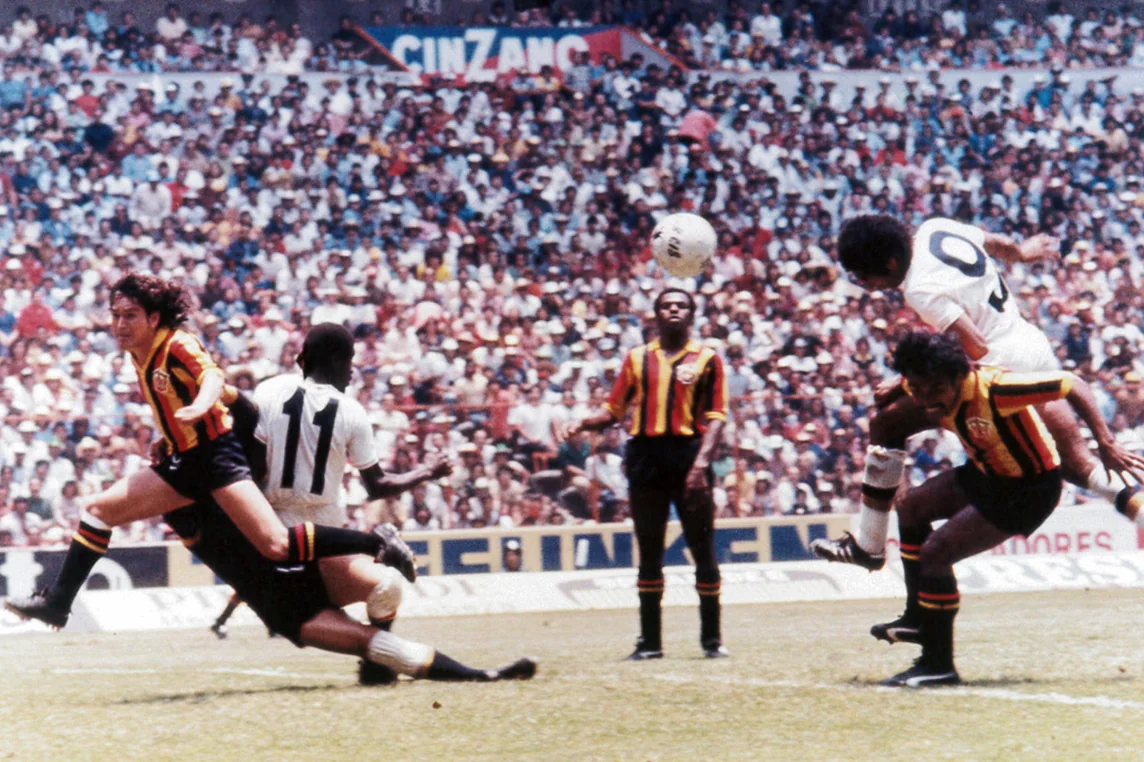
Pumas' anniversary chronology records four consecutive scoring crowns for Cabinho at the club, followed by another three in succession with Atlante. For a fan encountering the record for the first time, that sequence is more revealing than an isolated highlight: his standing came from returning to the top repeatedly. It also makes the shared award with Sánchez part of a much longer run, rather than an exception on which his reputation depends.
Sánchez's subsequent European fame can distort a comparison restricted to Mexican league goals. Goals scored in Spain belong to his wider career, but they cannot be added to his Mexican total to move him up this list. Conversely, Cabinho's decision to spend his most productive years in Mexico gave him more opportunities to build a domestic career record. The historical ranking measures the goals actually scored in this competition; it does not attempt to reconstruct what either player might have achieved in a different country.
That is why the old names remain useful company for the players on the current match schedule: they establish the scale of the challenge without requiring every generation to have an identical career path.
Hermosillo and Borgetti set the Mexican benchmark
Carlos Hermosillo is the highest-scoring Mexican in the established historical league table, while Jared Borgetti is the next Mexican on the list. Their reputations stretch beyond the numbers because supporters associate them with clubs, distinctive finishing and championship moments. The ranking gives their careers a common measuring stick without making them interchangeable forwards.
Carlos Hermosillo's long pursuit of 312
Hermosillo finished on 294, close enough to Cabinho for the comparison to remain central to his legacy. His career also supplies a useful answer to the claim that a high total necessarily comes from gentle accumulation. His run of three consecutive scoring titles at Cruz Azul included 35 goals in 1994–95, as the club's own history recalls. This was an elite peak within a long career.
For La Máquina, the most enduring image is the penalty against León in the Invierno 1997 final. Cruz Azul's official account of the decade describes Hermosillo scoring after the collision with goalkeeper Ángel David Comizzo. It was a match penalty in extra time, decided under the golden-goal rule then in force, rather than a shootout kick. That distinction matters to the scoring record as well as to the story of the championship.
A career total cannot tell a reader which goal a supporter values most. It can show that Hermosillo combined the spectacular season, the title-deciding finish and the persistence needed to approach 300. Those are separate strengths, and all belong in a serious comparison.
Jared Borgetti and the difference between club and league records
Borgetti's Santos Laguna record offers an unusually clear example of why totals differ. The club's Guerreros de Honor profile lists 189 league goals and 205 in total. Quoting 205 as his Santos contribution to a league-only table would import goals from outside the category being compared.
The same profile remembers his heading ability, his arrival from Atlas, and the championships of 1996 and 2001. Those details explain why he remains so closely connected to Torreón even though his 252-goal first-division career extended beyond Santos. A supporter looking at a list of club legends is asking about belonging and impact; someone comparing historical league scorers is adding the eligible goals across clubs.
Do not add Borgetti's Mexico goals or his foreign-club goals to close the gap on Hermosillo. Those are achievements in their own competitions. For a comparison with the modern teams, start with the current Liga MX standings and then keep the career scoring category consistent.
Cardozo's Toluca years explain the power of the Liguilla
Cardozo's 249 league goals combine 206 in the regular phase and 43 in the playoffs. His Toluca career is the clearest illustration of why the Liguilla belongs in a historical Mexican league scoring discussion. Removing it would remove goals scored in matches that decided the championship.
Why 29, 36 and 249 describe different achievements
The famous 29 refers to Cardozo's regular-phase goals in the Apertura 2002. The 36 includes seven more during that tournament's playoffs. The 249 is his Mexican first-division career total. These are nested achievements, not alternative answers to one question: the playoff seven are part of both the tournament total and his career league total.
GOAL's breakdown of Cardozo's records separates league and Liguilla goals. Keeping those categories visible makes the scale easier to appreciate than quoting whichever number sounds most dramatic. It also stops a reader from adding 29 to 36, which would count the same regular-season goals twice.
What playoff goals add to the historical argument
Playoff scoring asks a different question from the regular-phase scoring award: can a striker keep producing when an opponent studies the same tie across two legs and a single goal changes the route to the final? Cardozo's historical playoff tally gives Toluca supporters a substantial answer. It is evidence of repeated scoring in the championship phase, rather than a reputation resting on one final.
That does not make every playoff goal automatically more skilful than every regular-season finish. Match state, opposition and the quality of the chance still matter. It does mean that comparing Cardozo's career with an overseas league table that excludes every knockout match requires an explanation. The Liga MX Liguilla guide helps distinguish the competition's championship phase from a separate cup.
A fair way to compare short and long tournaments
Cardozo's Apertura 2002 regular phase lasted 19 matches, as MedioTiempo's retrospective specifies. Older long-season scoring awards and today's shorter tournaments offer different numbers of opportunities. Comparing a 35-goal long campaign with a 29-goal short tournament without mentioning match count hides a major part of the achievement.
For a more useful comparison, ask for goals, appearances, minutes where reliable, penalties, and whether the postseason is included. Then consider the team's supply of chances and the player's role. Those questions improve a football argument; they do not produce a magic formula that declares one generation superior. Cardozo's place among the leaders is secure without inventing an era-adjusted score.
Read the rest of the historical list with its era in mind
The names beyond the leading four are essential to Mexican football history, but the lower positions need more care than a copied top-ten graphic suggests. Historical compilations do not agree on every total, and a page updated recently can still contain an old active-player figure. A clear definition is more valuable than false precision.
Casarín, foreign scorers and the early decades
Horacio Casarín is the most obvious warning. AS's historical list gives him 238 goals, while RSSSF's compilation gives 240. Other accounts use another figure. His career began before the professional league's establishment in 1943, making the boundaries of historical football particularly relevant. This guide does not pretend those different figures form one universally agreed audited total.
That disagreement does not erase his importance or move him near Cabinho's 312. It does make a supposedly definitive lower table less useful unless its editor identifies the historical series being used. The sensible response is to retain the player in the discussion and label the uncertainty, rather than quietly choose the largest figure.
Osvaldo Castro, the Chilean remembered as Pata Bendita, and Luis Roberto Alves, better known as Zague, are consistently listed with 214 and 209 respectively in the historical compilations used here. Together with Cabinho and Cardozo, they show how much of Mexico's scoring history was built by players with different international backgrounds. Nationality is useful context; eligibility for a Mexico national-team scoring list is a completely different category.
Why a Gignac club milestone is not automatically a league total
André-Pierre Gignac is another reason to read the small print. Tigres celebrated his 200th official club goal after the match at León on January 17, 2024. The wording is official club goals, spanning competitions. It does not say he had reached 200 Mexican league goals that night.
That is a dated milestone, not his current total or a claim about his current club status. Any comparison with Cabinho must first isolate Gignac's regular-phase and Liguilla goals, then state the cutoff date. His achievements in continental and other club tournaments remain part of his Tigres story, but importing them into a league ranking changes the question halfway through the comparison.
The same discipline applies when a modern striker moves between clubs in the Liga MX table: the team badge changes; the competition definition should not.
How to follow today's scorers without confusing the records
Use a current tournament table for the Golden Boot race and a career table for the historical record. A forward leading an Apertura scoring chart has answered the first question. He has not automatically entered the all-time leaders, and a strong playoff run should be added only when the table's competition scope permits it.
Start with the tournament name and year. Apertura and Clausura are distinct championship campaigns, even when a website groups them under a season label such as 2026–27. If the page offers a phase filter, inspect it before comparing its number with a club milestone. A screen headed simply “top scorers” may be correct within its selected view while omitting the very games you wanted.
A quick checklist for comparing any scoring table
- Competition: Is this Mexico's top division, a domestic cup, a continental competition or every match for a club?
- Phase: Does the total include the regular phase, the Liguilla, or only one of them?
- Time: Is it one tournament, a calendar year, a cross-year season or a full career? What is the last included match?
- Player pool: Is the list open to everyone, Mexican players only, one club's players, or the national team?
- Measure: Are you comparing goals, goals per appearance, goals per 90 minutes, or goals plus assists?
For example, a current striker with ten regular-phase goals and two playoff goals has twelve league goals across those phases. A tournament award based on the regular phase may still display ten. Neither number should be combined with three cup goals and then compared with a league-only career chart. Writing the addition out is often enough to resolve an argument.
Follow the next opportunities through today's Liga MX matches and the Liguilla schedule. Cabinho's 312 remains the benchmark; understanding what belongs in that total makes every new milestone easier to judge.
Comments
Comments are reviewed before publication.
Sign in with Google to comment. Spam, abusive content, personal information and policy-violating links are not published.
Sign in with Google to comment or reply.
Loading comments…