Why the first Apertura 2026 weekend put VAR under immediate pressure
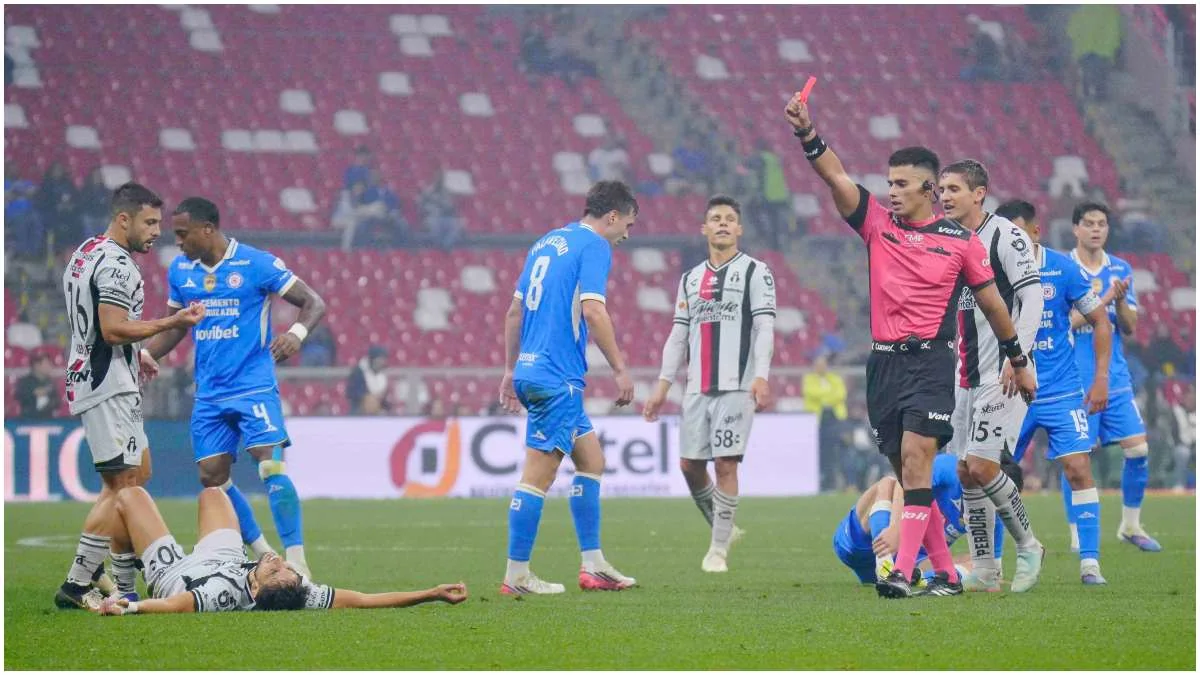
VAR became a story before Apertura 2026 had completed its first round. Atlante's opening-night defeat included a disputed penalty and a correctly reviewed offside, while Pumas-Pachuca produced the unnerving sight of a pitchside monitor without a signal. Fans were questioning both judgment and equipment within 48 hours.
Those are different failures and should be judged separately. A controversial penalty involves interpretation: how much contact occurred, who initiated it and whether the original call was clearly wrong. A blank monitor is an operational problem. Combining them into one complaint can feel satisfying, but it hides what the league actually needs to fix.
Necaxa's penalty against Atlante changed the opening-night result
Atlante led 1-0 in its first Liga MX match after returning to the top flight. In the 81st minute, referee Yonatan Peinado awarded Necaxa a penalty after contact between the home attacker and an Atlante defender. Julián Carranza converted, and the emotional direction of the match changed.
Former World Cup referee Fernando Guerrero argued that the Necaxa player pushed first and the defender's hold came afterward. In his assessment, the penalty should not have stood and the video officials should have recommended a review. Atlante coach Miguel Herrera focused on the same absence of intervention, saying the decision did not match the guidance clubs had received.
Necaxa then won 2-1 through Misael Pedroza in stoppage time. That goal provided an important counterpoint: the assistant initially flagged offside, VAR checked the position and the goal was validated. On the same night, video review produced an objective correction that the officials could support with a line while leaving the subjective penalty untouched.
That distinction did little to ease Atlante's anger. The Potros had been minutes from a winning return, and the debated decision directly preceded the equalizer. Supporters rarely separate protocol from consequence when two table points disappear in the closing stages.
The pitchside monitor failed during Pumas against Pachuca
At the Estadio Olímpico Universitario, a possible handball triggered another unusual scene. The referee was called to examine the play, but the review monitor beside the field had no signal. He could not watch the angles himself, so the officials in the video room reviewed the footage and communicated their assessment through his headset.
The match was not played without video assistance; the remote officials still had access to images. The problem was that the referee and everyone watching could see the normal on-field review mechanism fail. That damages confidence because the final decision arrives without the familiar visual proof that the referee personally assessed the replay.
For confirmed scores and the next match slate, use Liga MX games today. A controversy should be analyzed against the actual score and match minute, not a context-free clip.
The Jornada 2 incidents that made consistency the central complaint
By Jornada 2, supporters were asking a more damaging question than whether one referee had missed one call: why did some obvious-looking contacts trigger reviews while others did not? Cruz Azul appealed for handball against Puebla, and Atlante wanted a red card against América. Neither incident sent the referee to the monitor.
A replay can prove that contact happened without automatically proving the decision was clearly wrong. Handball depends on arm position, movement and context. Serious-foul-play decisions depend on speed, point of contact, force and whether the player endangered an opponent. Fans became frustrated because the broadcast showed the contact repeatedly but offered little explanation of the officials' threshold.
Cruz Azul wanted a handball penalty against Puebla
In the second half at Estadio Banorte, the ball struck Fernando Monárrez's left arm and then his hand as the Puebla player tried to bring it under control inside his own area. Cruz Azul players and supporters appealed, but no penalty was given and the referee was not called to conduct an on-field review.
Former referee Fernando Guerrero argued publicly that Monárrez used his forearm to lower the ball and that VAR should have recommended a review. That is an informed expert verdict, not an FMF admission of error. Without a published official explanation or audio, supporters were left to choose between the original no-call and the television analyst's reading.
Cruz Azul eventually won 2-1. Monárrez had put Puebla ahead in the 28th minute before Luka Romero equalized and Christian Ebere scored the 82nd-minute winner. The result reduced the practical damage, but it did not answer the rules question. A controversial call can remain important even when the protesting team wins.
Atlante wanted a red card against Club America
At Estadio Banorte three days later, an América challenge landed with studs on Jhojan Julio's planted foot after the ball had been played. Referee Katia Itzel García did not show a card and VAR did not recommend an on-field review. Miguel Herrera's protest earned the Atlante coach a yellow card.
The argument was not simply that the contact looked painful. Atlante's case was that a studs-first impact on a supporting foot endangered the opponent and therefore belonged in the serious-foul-play conversation. The opposing interpretation was that the player reached the ball first and the follow-through did not cross the clear-red threshold. The missing piece for viewers was an authoritative explanation of which factors carried the decision.
Later in the same 1-1 draw, a separate incident involving América goalkeeper Rodolfo Cota did receive VAR attention and did not end in an expulsion. Different plays can correctly produce different processes, but the contrast intensified Atlante's feeling that review access was uneven.
The Liga MX schedule this week helps place each disputed clip within the actual Jornada rather than letting separate matches blur together.
Later reviews showed VAR could correct calls and still leave fans frustrated
The next rounds produced evidence for both sides of the VAR debate. Video officials helped correct the severity of card decisions and supported several accurate outcomes. They also stayed out of incidents that respected former referee Roberto García Orozco believed demanded intervention. The problem was no longer technology versus no technology; it was when the safety net opened.
Jornada 5 produced both useful corrections and a disputed non-call
In Querétaro-Toluca, Diego Barbosa initially received a yellow card for his challenge on Omenchenko. VAR recommended an on-field review, and referee Jonathan Peinado upgraded the sanction to red. García Orozco considered the correction right because the challenge used excessive force.
Cruz Azul-Atlas then offered two more revealing cases. Luis Estévez was initially sent off for a tackle on Paradela. After reviewing the replay, referee Guillermo Pacheco reduced red to yellow, deciding the challenge was reckless rather than excessive. Again, the analyst supported the final outcome. VAR had prevented an overpunishment.
The disputed moment came before an Atlas goal. García Orozco argued that Edgar Saldívar used both hands on Jeremy Márquez's back and stopped him from competing fairly for the ball. Pacheco let play continue, the video check did not recommend a review, and Atlas scored. The former referee described that as a missed foul with a direct effect on the scoreboard.
These three incidents resist an easy verdict that VAR either worked or failed during Jornada 5. It improved two disciplinary calls while, in one expert's assessment, missing a foul in the attacking phase before a goal. Review quality has to be measured play by play.
Atlante's Jornada 6 complaint kept the pattern alive
Atlante was back at the center of the discussion against León. In the 18th minute, Jhojan Julio was held inside the area while trying to reach the ball. The referee allowed play to continue and VAR did not recommend the monitor. García Orozco considered the hold evident and penalty-worthy.
Later in the match, León received a penalty after an on-field review. The analyst agreed with the final penalty decision but questioned why VAR had intervened when the referee's original judgment did not appear to be a clear and obvious error. That distinction is crucial: a referee can reach a defensible final outcome through a review that arguably should not have been initiated.
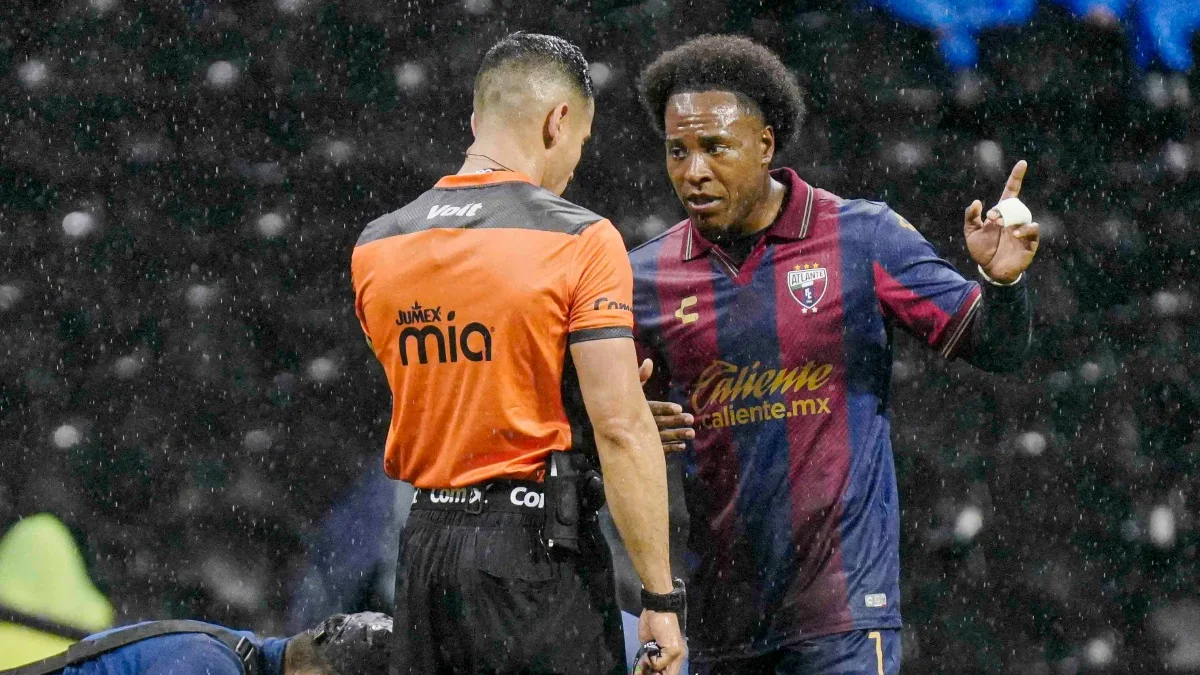
Atlante rescued a 1-1 draw, yet the two penalty-area episodes left its supporters with the familiar consistency complaint. One hold brought no monitor visit; another incident did. The television audience heard analysis afterward, but not the officials' live reasoning.
Those points can shape seeding months later. Check the current Liga MX standings before judging how much a disputed result changed a club's position.
What VAR can actually review in Liga MX
VAR is a limited safety net, not a second referee with permission to revisit every foul. The protocol concentrates on match-changing incidents and normally requires a clear and obvious error or serious missed incident. Understanding that limit does not settle the Apertura arguments, but it explains why many replayed contacts never lead to the monitor.
The four reviewable categories and clear-error threshold
The four core categories are goal or no goal, penalty or no penalty, direct red cards and mistaken identity when the wrong player is sanctioned. The video official automatically checks relevant incidents in those categories. Most checks are silent and end without a public signal because the VAR does not find a probable clear error.
If the replay suggests a subjective judgment may be clearly wrong, the VAR can recommend an on-field review. The referee watches selected angles and retains the final decision. Factual questions, such as whether an offence occurred inside or outside the area or whether a player was offside, can usually be communicated without a monitor visit.
The 2026/27 Laws include nuances fans should know. A competition may allow VAR to correct a clearly wrong corner decision immediately without delaying the restart. VAR can also correct a second yellow that was actually shown and was clearly wrong, but it cannot intervene simply because the referee missed an offence that might have produced a player's second booking.
This is why “VAR checked it” and “the referee reviewed it” mean different things. The first happens routinely in the video room. The second is the visible decision-making step prompted by evidence of a probable error. A long check can still finish with the original call.
Semi-automated offside solves a narrower question
Liga MX introduced semi-automated offside technology, commonly shortened to SAOT, during 2026. The announced system uses a network of 28 cameras at each stadium to track players, model body positions and create a three-dimensional reconstruction for tight offside decisions.
SAOT helps identify the position of an attacker and the relevant moment the ball was played. That can make a decision like Pedroza's winner against Atlante faster and more consistent. The technology is “semi-automated” because match officials still supervise the process and communicate the final decision.
It does not measure whether a defender's hold was strong enough for a penalty, whether a player's arm made the body unnaturally bigger, or whether a tackle used excessive force. Those remain interpretations governed by the Laws and the referee's judgment. Better offside technology therefore cannot cure the controversies that dominated the first six Jornadas.
Mostly factual
Offside position, ball out of play and the location of an offence.
Still subjective
Handball considerations, tackle intensity and whether contact is punishable.
Our Liga MX 2026/27 season guide explains where these weekly decisions fit within the Apertura, Clausura and Liguilla calendar.
What would rebuild trust in Liga MX refereeing
Liga MX will not end argument over handball, holding or tackle force; interpretation is part of football. It can make the argument better informed. The clearest route is to explain major review decisions quickly and demand stronger original calls from the on-field crew. Technology earns trust when supporters understand how it was used.
Faster public explanations would clarify process and interpretation
The current IFAB protocol allows competitions to use a system in which the referee publicly explains a decision after a VAR review or lengthy check. Liga MX could make that communication routine for match-changing incidents, especially when the final call differs from what most people in the stadium expected.
A useful explanation does not need a five-minute rules lecture. It can identify the incident under review, state the original decision, name the decisive consideration and give the final ruling. “Penalty review: the defender held the attacker's shirt, the original no-penalty decision is overturned” tells a supporter far more than the rectangle signal alone.
A post-match review should then address the most debated non-interventions. The central mystery in several Apertura incidents was why the referee never reached the screen. Explaining that the available angles did not meet the clear-error threshold would not make every fan agree, but it would reveal the standard being applied.
Published audio can add context when handled consistently and promptly. Selective release after a controversy risks looking defensive. A predictable weekly format covering both correct interventions and acknowledged mistakes would be more credible because clubs and supporters could compare the language used across similar plays.
Better consistency starts with stronger on-field decisions
IFAB requires referees to make an original decision as though VAR were absent. That principle matters because the video official is meant to correct major errors, not replace positioning, teamwork or authority on the field. A referee who waits mentally for the replay increases delays and makes the intervention threshold harder to read.
The Jornada 5 examples show the value of that balance. VAR properly helped change the severity of two cards, but the officials still needed to identify and manage the original challenges. The Jornada 6 criticism went beyond the video room to the referee's angle, assistant support and control of player protests.
For fans, the fairest habit is to ask four questions: Was the incident in a reviewable category? What did the referee originally decide? Was the disputed fact objective or interpretive? Did the replay clearly disprove the original call? That framework produces a sharper discussion than counting every decision for or against one shirt.
- Publish the reason: category, decisive fact and final call.
- Review the non-calls: explain why the threshold was not met.
- Train the whole crew: positioning and communication matter before video.
- Apply one format: cover good calls and errors with equal visibility.
The stakes rise in two-leg knockout football, where one penalty can shape an aggregate score. Follow the Liga MX Liguilla bracket and apply the same rules test to each disputed decision.
Comments
Comments are reviewed before publication.
Sign in with Google to comment. Spam, abusive content, personal information and policy-violating links are not published.
Sign in with Google to comment or reply.
Loading comments…