Which Mexico roster was announced on November 5?
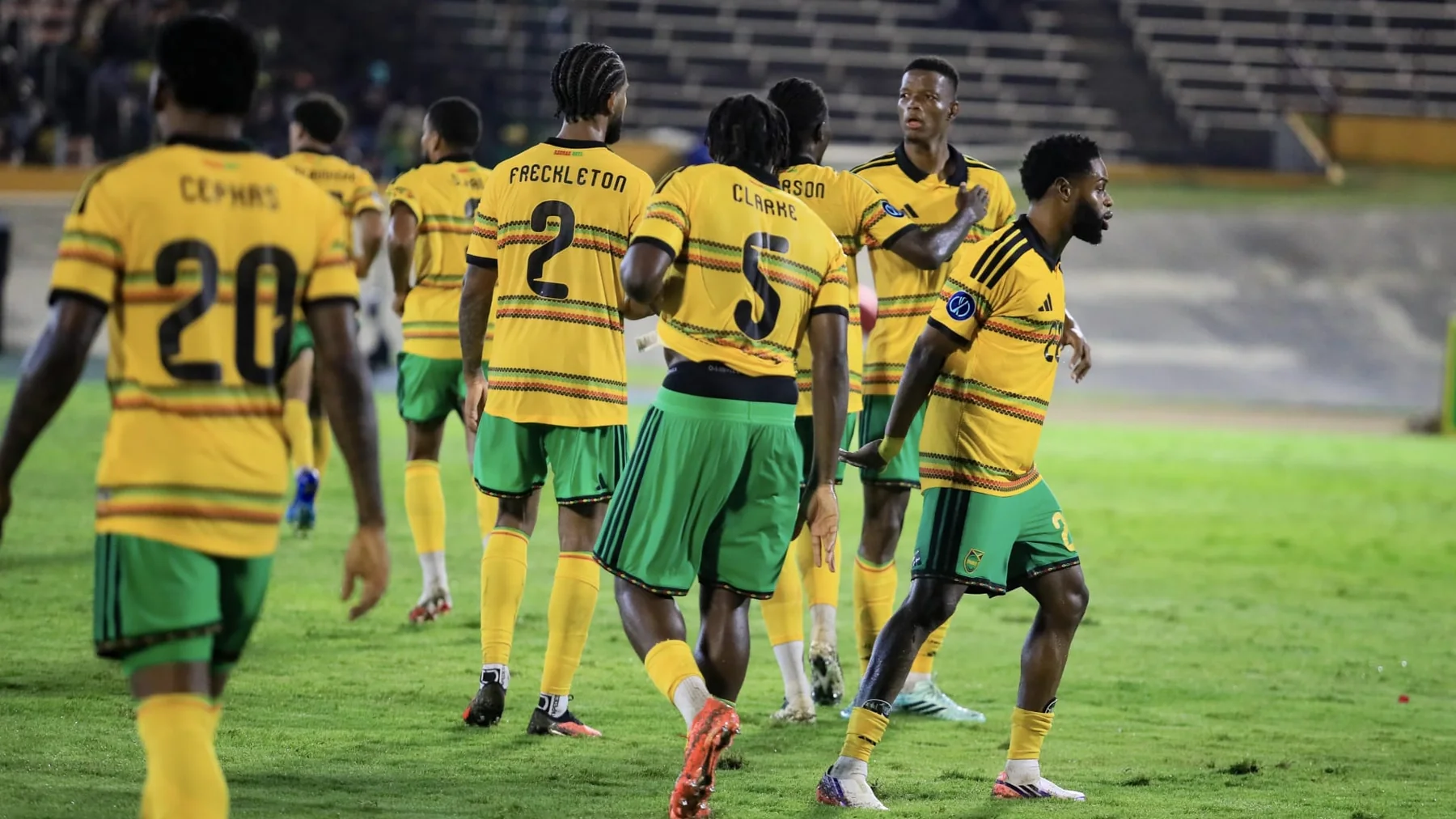
Mexico called up 28 players on November 5, 2026 to face Jamaica in the Concacaf Nations League quarterfinals. Rafael Márquez’s list had three goalkeepers, nine defenders, eight midfielders and eight forwards. It covered both the November 14 first leg in Kingston and the November 17 return leg in Nuevo León. Those were his first competitive games in charge of the senior men’s national team. See the Mexican federation’s original roster announcement.
The call-up was for a home-and-away series during one international window. Mexico planned to gather on November 8 in Mayakoba, on the Riviera Maya, before traveling to Jamaica on November 12. The players had two games in four calendar days and a trip back to Mexico between them. A 28-player group gave Márquez choices for the opening lineup, the return match and changes during play.
What the 28-player call-up tells you
A convocatoria is the squad invitation. It answers who the federation selected for the window and which clubs it named beside those players. The team sheet answers who started a specific match. An appearance can come from either starting or coming off the bench. If you’re checking a player’s national-team record, look at the starters and substitution entries for each game.
Keep the announcement date with the club list. The federation’s team page shows player cards that can be updated between windows, and its position labels may group wide players differently from the announcement. The roster here uses the four position groups from November 5. The separate lineups show how Márquez actually arranged the side on November 14 and 17. See Mexico’s official senior-team page for the federation’s roster and reports.
On the Spanish-language federation site, ida is the first leg and vuelta is the return leg. The dates here are the dates at each venue. A results app using another time zone can display a late evening game under the following day.
All 28 Mexico call-ups by position and club
Seventeen of the 28 players were listed with Liga MX clubs. Chivas supplied five, América four, Cruz Azul three and Toluca two. León, Tijuana and Monterrey contributed one each. Eleven players were listed with clubs outside Mexico. The names, position groups and clubs in the tables follow the November 5 federation release.
The domestic group reaches across the roster. Americans familiar with Liga MX may recognize several of the names from the same club match, but a national-team selection brings club rivals into the same unit. Put the club and position columns together and the mix is easier to follow. América contributed two defenders plus a midfielder and a forward. Cruz Azul contributed a defender and two midfielders. Chivas was the only club with a player in each of the four position groups.
Goalkeepers and defenders
| Player | Club on November 5 |
|---|---|
| Raúl Rangel | Chivas |
| Óscar García | León |
| Alex Padilla | Athletic Club |
| Player | Club on November 5 |
|---|---|
| Rodrigo Huescas | Copenhague |
| Kevin Álvarez | América |
| César Montes | Lokomotiv Moscú |
| Israel Reyes | América |
| Diego Campillo | Chivas |
| Johan Vásquez | Genoa |
| Jesús Orozco Chiquete | Cruz Azul |
| Jesús Gallardo | Toluca |
| Mateo Chávez | AZ Alkmaar |
Two of the three keepers and five of the nine defenders came from Liga MX clubs. Rangel and García were listed with Chivas and León, and Padilla with Athletic Club. The fullback and center-back choices stretch beyond any one league. For example, the release puts Huescas at Copenhague and Chávez at AZ Alkmaar, while América supplied Álvarez and Reyes and Cruz Azul supplied Orozco Chiquete. The two Nov. 14 and Nov. 17 team sheets below show how those club lines came together.
The Orozco and Gallardo entries are worth reading by full name. Both defenders are named Jesús, and the federation’s match recaps shorten Orozco Chiquete to Jesús Orozco. Both refer to the Cruz Azul call-up when that surname appears in the lineup. Jesús Gallardo is the Toluca defender on the same announcement.
Midfielders
| Player | Club on November 5 |
|---|---|
| Erik Lira | Cruz Azul |
| Luis Romo | Chivas |
| Erick Sánchez | América |
| Obed Vargas | Atlético de Madrid |
| Álvaro Fidalgo | Real Betis |
| Gilberto Mora | Tijuana |
| Andrés Montaño | Cruz Azul |
| Santiago Sandoval | Chivas |
Liga MX accounted for six of the eight players listed in midfield, the largest domestic share of any position group in the announcement. Cruz Azul’s two were Erik Lira and Andrés Montaño. Chivas’s two were Luis Romo and Santiago Sandoval. Erick Sánchez represented América and Gilberto Mora represented Tijuana. The two players at Spanish clubs were Obed Vargas of Atlético de Madrid and Álvaro Fidalgo of Real Betis.
Sandoval and Santiago Gimenez share a first name and appear in different groups. Sandoval was the Chivas midfielder on this call-up, while Gimenez was listed among the forwards. That distinction matters when checking a substitution entry with only a surname or when matching the national-team list against a club lineup. For domestic fixtures involving the selected players’ clubs, use the Liga MX club schedule.
Forwards
| Player | Club on November 5 |
|---|---|
| Isaías Violante | América |
| Roberto Alvarado | Chivas |
| Jesús Corona | Monterrey |
| Alexis Vega | Toluca |
| Armando León | NK Osijek |
| Julián Quiñones | Al Qadsiah |
| Santiago Gimenez | FC Porto |
| Armando González | Olympiakos |
The forward list divided evenly between Liga MX clubs and clubs outside Mexico. Four domestic teams supplied one forward each. Isaías Violante represented América, Roberto Alvarado Chivas, Jesús Corona Monterrey and Alexis Vega Toluca. The other four entries identify clubs in Croatia, Saudi Arabia, Portugal and Greece. Two players here are named Armando. The federation listed Armando León with NK Osijek and Armando González with Olympiakos. Neither name refers to goalkeeper Óscar García’s club, León.
Read the position headings as the federation’s November 5 categories. A forward listing can cover players used in wide areas as well as players selected through the middle. The starting lineups and substitutions show which of those options were used against Jamaica and how Márquez changed the attack with the tie still in play.
Who started each Mexico match against Jamaica?
Rafael Márquez changed five starters between Kingston and the return at Estadio BBVA. Goalkeeper Raúl Rangel and five outfield players started both games. The return lineup also put Jesús Corona on from the opening whistle after he had played as a substitute in Kingston. He scored the goal that leveled the tie. The starting groups and in-game replacements tell different parts of that story.
November 14 in Kingston
Mexico starting XI – Raúl Rangel in goal. Israel Reyes, César Montes, Johan Vásquez and Jesús Gallardo in defense. Erik Lira, Luis Romo and Gilberto Mora in midfield. Roberto Alvarado, Santiago Gimenez and Julián Quiñones in attack. See the starting pitch diagram in the Concacaf post-match report.
Alvarado and Quiñones started around Gimenez, who occupied the central spot in the starting diagram. Mora and Romo were part of the line behind them with Lira. All the opening selections matter when reading the outcome, because both of Mexico’s scorers had been in the game from kickoff. Mora brought Mexico back into the match with a low shot from outside the box in the 70th minute. Quiñones converted an 81st-minute penalty to move the score from 3–1 to 3–2. At 18 years and 31 days, Mora became Mexico’s youngest scorer in the Concacaf Nations League. See the official first-leg recap.
Concacaf’s player summary also records appearances off the bench for Corona, Alexis Vega, Kevin Álvarez and Santiago Sandoval. It gives a clearer account of who played than the original 28-player invitation. The starting group registered 17 Mexican attempts together with the substitutes, with seven shots on target across the team. Jamaica keeper Jahmali Waite made five saves. That combination helps explain how Mexico could generate chances and still carry a loss back home.
November 17 at Estadio BBVA
Mexico starting XI – Raúl Rangel in goal. Rodrigo Huescas, Israel Reyes, Jesús Orozco Chiquete and Mateo Chávez in defense. Erik Lira, Álvaro Fidalgo and Gilberto Mora in midfield. Roberto Alvarado, Jesús Corona and Julián Quiñones in attack. See Mexico’s official return-leg report.
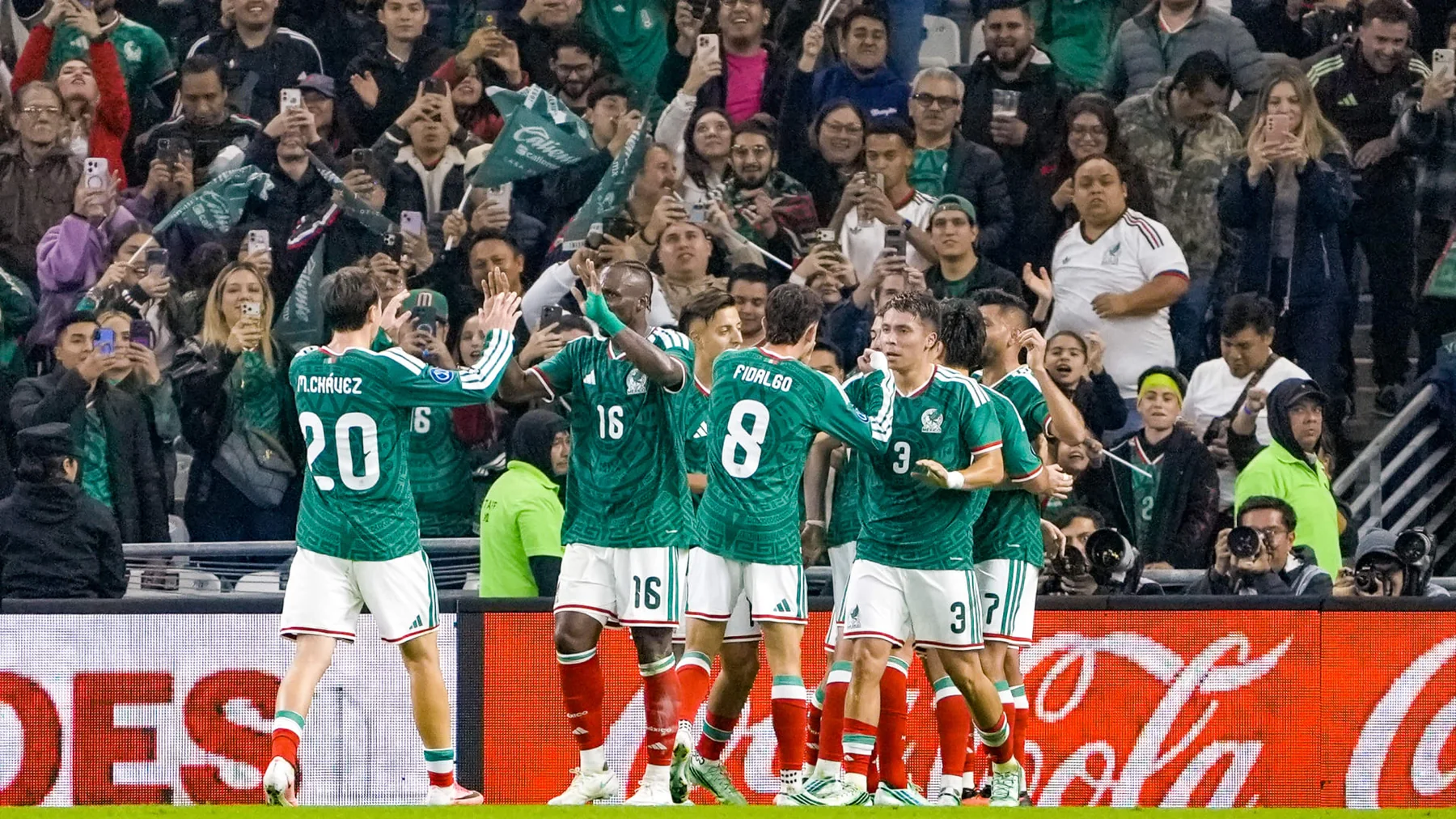
Reyes was the only defender to start both legs. Huescas, Orozco Chiquete and Chávez came into the back line. Fidalgo joined Lira and Mora, and Corona began the game with Alvarado and Quiñones ahead of them. Márquez kept Rangel behind the rebuilt defense and retained five outfield starters in all. Reyes completed 92 of 99 attempted passes in the home leg, which Concacaf identified as the most by a Mexico player in a Nations League match to that point. Jamaica finished without a shot on target. See the organizer’s return-leg match data.
Corona scored in the 35th minute, taking a pass from Quiñones before shooting from the edge of the area. In the second half, Álvarez replaced Huescas and Sandoval replaced Alvarado in the 57th minute. Montaño came on for Corona in the 71st. Vega replaced Mora and Armando González replaced Quiñones in the 82nd. Quiñones finished the series with a goal in Kingston and the setup for the goal in Nuevo León. Corona was part of the first-leg bench rotation and the match-winner in the second.
How a 3–3 aggregate draw sent Mexico through
Mexico went through because it scored twice as the away team in Kingston and kept Jamaica scoreless in the return at Estadio BBVA. Jamaica won the first game 3–2 and Mexico won the second 1–0, leaving three goals for each national team over the series. Concacaf then applied the first tiebreak, away goals. See Mexico’s official qualification report.
The result also shows how the two lineups contributed to a single outcome. Gilberto Mora and Julián Quiñones scored in Kingston. Quiñones then set up Jesús Corona’s goal in Guadalupe, while a defense with three new starters helped hold Jamaica scoreless. The result depended on both the late goals in the first match and the clean sheet in the second.
Why the Kingston goals mattered after the return leg
Start with the aggregate score, which is both legs added together. At kickoff in Nuevo León, Mexico was one goal behind. If the second game had stayed at 0–0, Jamaica would have advanced 3–2 outright. Corona’s goal took Mexico to three goals over the two nights. The game could finish with just that one goal because Mexico also had the stronger away record at the final whistle.
Only the venue where each goal was scored determines the away count. Mexico recorded both of its away goals at the National Stadium. Jamaica scored all three of its goals at home and had zero in Mexico. The reported result stays 3–3 on aggregate with a 2–0 away-goal advantage for Mexico. It is also correct to record one win for each team when looking up the individual games.
Consider a different one-goal home win. If Mexico had won the return 3–2, the sides would have finished 5–5 on aggregate and 2–2 on away goals. The rule would then have sent the return leg to extra time, with penalties available if the tie remained level. A scoreline with the same margin can produce a different tiebreak outcome. Article 12.13 covers the two-leg quarterfinals in the competition regulations.
The next round uses a one-match format. If the semifinal against the United States is tied at the end of regulation, it goes directly to penalties under Article 12.19. There is no return leg and no aggregate to total in that round. Viewers following a match tracker can read a late equalizer there as a potential route to the shootout.
What the November results confirm for March
Concacaf confirmed that Mexico will play the United States on Thursday, March 25, 2027 at SoFi Stadium in Inglewood. Kickoff is at 7:15 p.m. Pacific, following Canada–Panama. Mexico was the fourth seed among the quarterfinal winners after recording one win and one loss. The United States earned six points from its two wins, and its goal difference put it above Canada. The bracket pairs first with fourth and second with third. See the confirmed Concacaf schedule.
Advancing also booked Mexico’s place in the 2027 Gold Cup, scheduled for June 17 through July 11. The Nations League semifinal determines which team moves closer to this competition’s trophy. Jamaica’s quarterfinal loss put it into the separate Gold Cup Prelims. See Concacaf’s Gold Cup qualification guide.
Keep the November list to compare Márquez’s selections when the next call-up arrives. Rangel played behind two different back lines, Mora started each game and Corona moved from substitute to starter. Those choices show what the coach used against Jamaica. A new federation announcement will establish the squad for March, and the match-day team sheet will establish which players face the United States from kickoff.
Comments
Comments are reviewed before publication.
Sign in with Google to comment. Spam, abusive content, personal information and policy-violating links are not published.
Sign in with Google to comment or reply.
Loading comments…