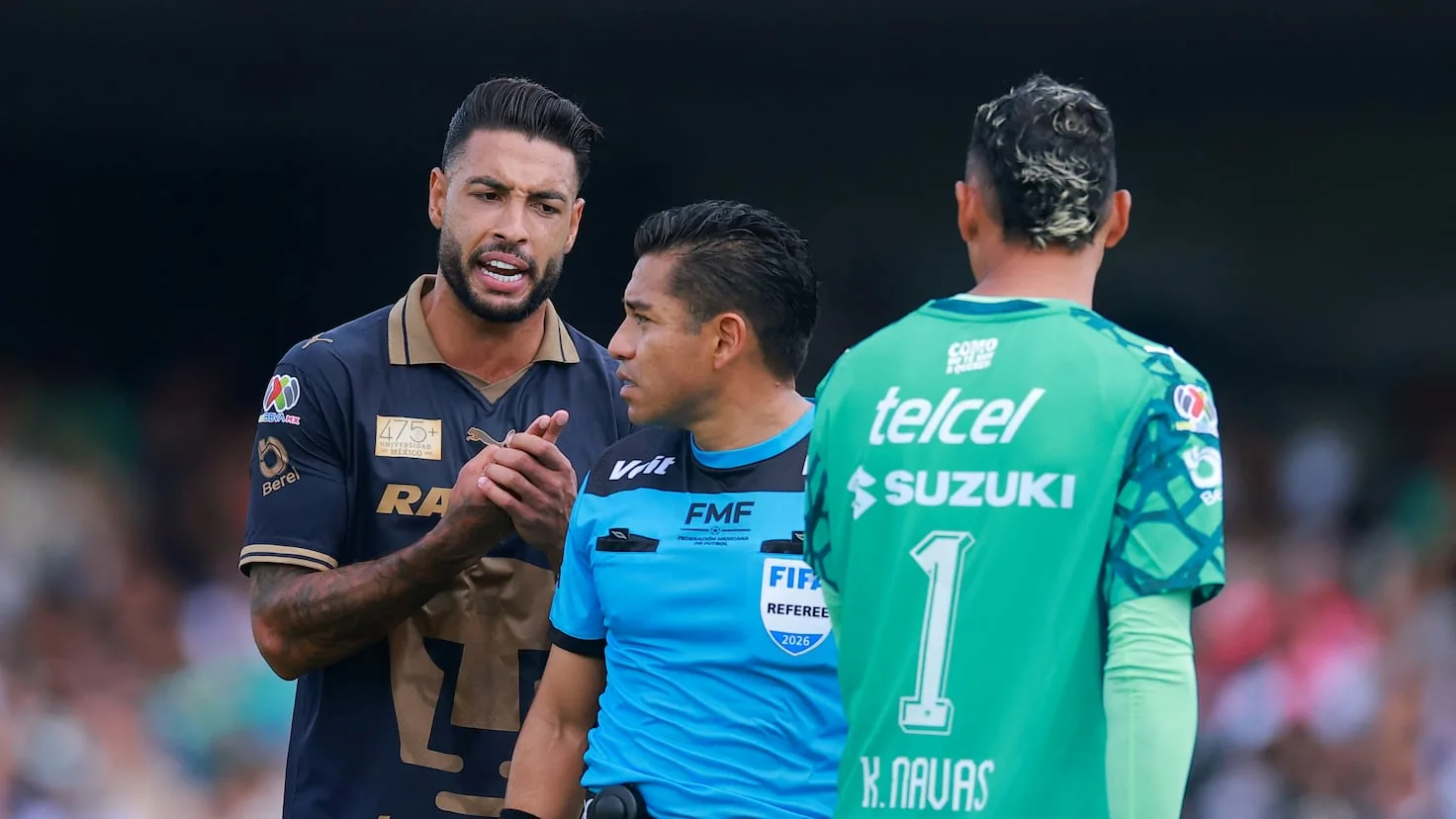
Nathan Silva won relief from the suspension attached to his early red card against Santos Laguna. The FMF confirmed the card's removal in its October 23, 2026 disciplinary report. Pumas did not get the match back. The 2-0 defeat in Torreón remains the result, even though the defender was subsequently cleared for the October 24 meeting with Tigres.
That distinction explains much of the frustration around the case. A penalty decision, a sending-off for denying an obvious goal-scoring opportunity, and a later disciplinary challenge answer different questions. This guide, updated October 29, separates those decisions, explains the rule behind the argument and shows what supporters can reasonably conclude from a successful appeal.
What happened in Santos Laguna against Pumas
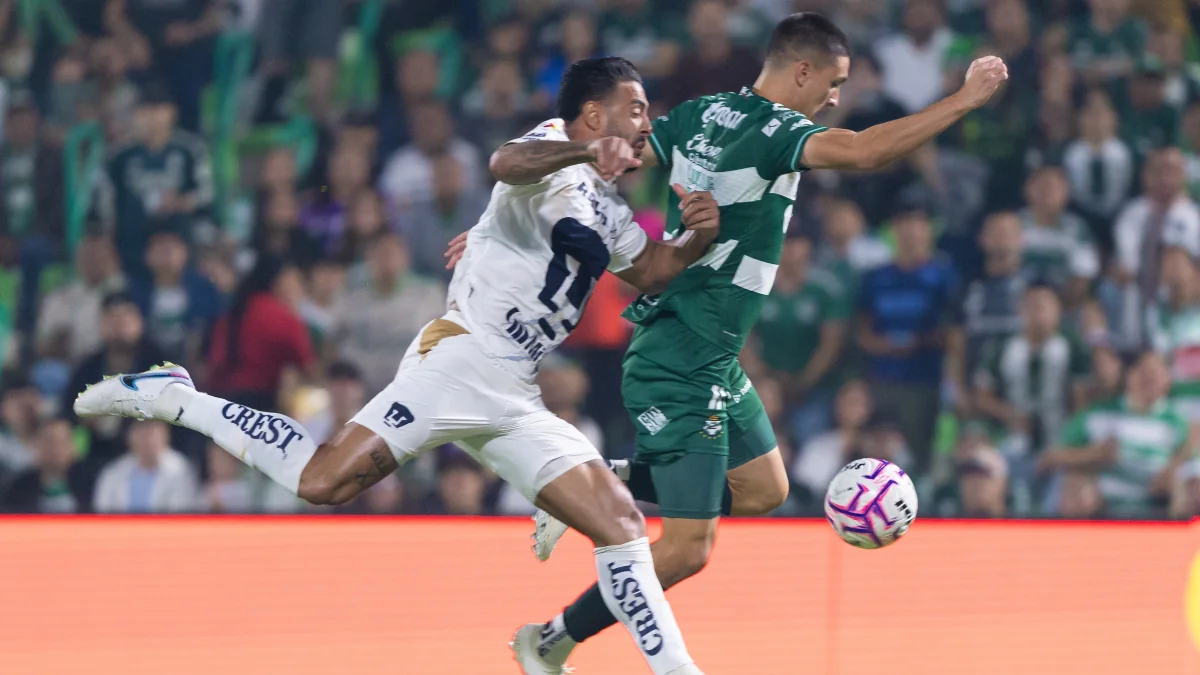
Pumas lost 2-0 at Santos Laguna on October 21, with Nathan Silva dismissed almost immediately. The club's report, published the following morning, places his contact with Ezequiel Bullaude before the opening minute had been completed. Referee Guillermo Pacheco Larios awarded a penalty and showed the Brazilian defender a direct red card at TSM Corona in Torreón.
Those were two decisions with different consequences. The penalty gave Santos a shot from the spot; the dismissal reduced Pumas to ten players. Eduardo Aguirre opened the scoring, and Franco Pardo later converted another penalty. A challenge to the red card did not automatically challenge every other decision made during the evening.
Coach Esteban Solari's anger after the match, reported by Soy Futbol, centered on the damage to his team's opportunity to compete. That reaction explains the stakes for Pumas without deciding the rules question. A coach can reasonably describe a dismissal as decisive while the formal argument still needs to identify which requirement for a sending-off was not satisfied.
Why the first-minute dismissal mattered
Losing a center back at that stage can force choices throughout a team: whether to remove an attacker, ask a midfielder to protect the defense, concede territory or press with fewer players. These are the normal tactical costs of an early dismissal, rather than a claim that Pumas used a particular unreported formation. A substitute cannot simply replace a player who has been sent off.
The timing also explains why the eventual appeal could feel incomplete to supporters. Removing a future suspension restores an option for another match. It cannot return the minutes Pumas had already played with ten, reverse the fatigue incurred by the remaining players or recreate chances that a different team shape might have produced. Equally, nobody can calculate an alternative result from that frustration: eleven against eleven does not guarantee a Pumas win, a draw or a saved penalty.
Read the club's immediate postmatch position as history, too. A points total printed on October 22 belongs to that moment, before subsequent fixtures. The current Liga MX standings are the appropriate place to assess the remaining playoff race. Combining an old disciplinary headline with an old table can make a resolved case appear to be a new crisis.
When a penalty can still come with a DOGSO red card
A penalty does not automatically reduce a red card to yellow. DOGSO means denying an obvious goal-scoring opportunity. Under IFAB Law 12, the type of offence matters once an obvious chance has been denied. The popular phrase about avoiding double punishment describes an exception, rather than a ban on awarding both a penalty and a dismissal.
The obvious-chance test goes beyond the last defender
Being the last outfield defender is a useful television description, but it is not the whole test. Officials consider the distance to goal, the general direction of play, the likelihood of keeping or gaining control of the ball, and the location and number of defenders and attackers. A foul inside the box may justify a penalty without necessarily preventing an obvious scoring opportunity.
Consider two illustrative situations, rather than reconstructions of Silva's incident. In one, an attacker has a playable touch toward goal and a clear route to shoot. In another, a heavy touch sends the ball away while a covering player can intervene. Both may involve an unlawful push. They do not necessarily present the same opportunity to score. That is why a replay showing contact alone cannot settle the card argument: viewers also need the ball's path and the players' positions.
A challenge for the ball is different from a push
If a defender commits a DOGSO offence in their own penalty area while attempting to play or challenging for the ball, and a penalty is awarded, the DOGSO sanction is a caution. Holding, pulling, pushing or an offence with no possibility of playing the ball does not receive that reduction. The obvious-chance requirement still comes first; a push is not an automatic red wherever it happens.
The competing interpretations were visible before the appeal outcome. In ClaroSports' October 22 analysis, former referee Roberto García Orozco supported Pacheco's decision. He considered Bullaude likely to control the ball and shoot, and characterized Silva's forearm contact as a push rather than a ball challenge. That was an analyst's assessment. It is useful for understanding the argument, but it cannot substitute for the reasoning of the authority that later removed the suspension.
When watching the replay, ask the questions in that order: was there an offence; what opportunity did it prevent; and what kind of action caused it? Avoid treating a freeze-frame of an arm as an answer to all three. Also keep dangerous play separate. A challenge that independently amounts to serious foul play can still warrant a dismissal; calling an action a ball challenge does not excuse excessive force or danger to an opponent.
What the successful appeal actually changed
The benefit was straightforward: Silva was cleared of the suspension arising from this dismissal and became available for the October 24 Tigres fixture. The FMF confirmed the favorable outcome on October 23. Availability meant Solari could consider the defender; it did not guarantee a start, erase another possible fitness issue or decide Pumas' next result.
There is a mechanism for correcting disciplinary errors. Article 72 of the FMF's 2026–27 sanctions regulations covers mistaken disciplinary decisions involving direct or indirect red cards and permits video evidence. A challenge to a disciplinary decision is therefore a real remedy, rather than just a club statement expressing anger. The regulations also distinguish that correction process from an appeal against a Disciplinary Commission ruling.
The short official notice does not provide a detailed assessment of Silva's action or the scoring opportunity. Some reports describe Pumas' argument as a challenge to whether the chance was obvious. The confirmed outcome is that the card was removed. It does not justify inventing a committee quotation, saying every official agreed the contact was legal or claiming the penalty itself was retrospectively canceled.
Removing a suspension does not undo the match
The laws protect a distinction between a match result and later discipline. Law 5 treats the referee's decisions on facts connected with play and the result as final. The VAR protocol also says that, in principle, an incorrect VAR decision or a decision not to review does not invalidate a match. Those provisions explain why a successful card challenge does not itself trigger a replay.
Nor can supporters simply subtract a disputed goal and calculate a new score. A penalty may remain a valid decision even when a red card is removed. Beyond that, football after the incident is an unfolding contest: the players, substitutions, risk-taking and spaces available can all change. Taking one event out of the record and leaving everything else untouched produces an imagined score, rather than an official result.
That leaves a fair demand for explanation. Fans can ask which part of the dismissal was considered wrong, whether the review process worked and how a similar incident will be handled next time. Those questions concern accountability and consistency. They are stronger than assuming the successful challenge awarded Pumas points or established a right to play Santos again.
Why not visiting the VAR monitor does not mean no check happened
A referee can leave a decision unchanged without going to the monitor while the video officials still check the incident. TUDN reported that Pacheco did not visit the screen for Silva's dismissal. That observation matters, but it cannot establish that nobody examined the footage or reveal what was said through the officials' headsets.
The relevant decisions were within VAR's scope: a penalty and a direct red card. The important procedural question is therefore whether the video evidence showed the kind of clear and obvious error requiring intervention. That is more precise than saying the system was unavailable because the referee stayed on the pitch. It also avoids treating the existence of a reviewable category as an instruction to reverse every close judgment.
The difference between a check and an on-field review
A check is the video officials' examination of a relevant incident. An on-field review is the referee's own look at the replay monitor. The IFAB VAR protocol allows checks that end without a visible interruption when no qualifying error is identified. A spectator sees the monitor visit; the spectator does not necessarily see the earlier examination behind it.
When a review is justified, judgment calls generally call for the referee to inspect the pictures, while factual information can sometimes be handled through communication with the VAR. The referee remains responsible for the final decision. Neither the player nor the coach gains a standard right to demand an on-field review simply by disputing a card.
For this incident, the missing information is specific. Which views were available? How was Bullaude's chance assessed? Did the officials distinguish the existence of a foul from the DOGSO requirement? Was the original interpretation considered clearly wrong? Those are useful questions for an explanation or released audio. Without that record, filling the silence with an invented conversation would only make the controversy harder to understand.
The later removal of a suspension deserves scrutiny alongside the live decision, but the two processes should be compared carefully. A postmatch authority can examine a disciplinary complaint; a VAR has an in-match role and an intervention threshold. A different outcome does not by itself establish what each official thought at the time, whether an instruction was ignored or whether anyone acted deliberately against Pumas.
How Pumas fans can read the next disciplinary update
Start with the actual decision and the player's identity. The FMF's October 23 report for Jornada 13 identifies Pumas' number six as Nathanael Da Silva. It says the club requested a review, the evidence was examined and the card was removed, allowing him to participate in the next match. That is direct confirmation of the outcome, using a fuller version of the name familiar to fans as Nathan Silva.
Check the decision before repeating the headline
The notice does not publish a detailed DOGSO assessment. That limitation is compatible with a clear outcome: the card was removed, while the public explanation leaves the precise evaluation of the chance unstated. When a headline adds a specific technical reason, check whether it comes from the decision, a club argument or a journalist's account. Those sources can contribute different information without being interchangeable.
Check the publication time as well as the date. On October 23, a report saying Pumas had submitted a challenge could be accurate before the favorable outcome became known. Shared later, it can misleadingly suggest the player is still waiting. Read beyond a social-media card and look for language that says whether a request was filed, accepted for consideration or decided.
A successful challenge also should not be expanded into an unreported punishment for the referee. A suspension list about players answers a player-discipline question. It does not, by itself, establish which assignments an official will receive or what an internal assessment found. Likewise, one favorable case does not mean a future defender can escape a red card merely by comparing shirt colors or the rough location of contact.
Separate eligibility, selection and the playoff table
For the next match you intend to watch, eligibility is only the first selection check. A player may be free of this particular suspension while the coach chooses another option, manages fatigue or responds to a separate fitness concern. Treat a disciplinary clearance as permission to select, rather than confirmation of the starting eleven. The team announcement remains the place to settle who actually plays.
Then put the match in its current context. Use the fixtures this week for the next game and the Liguilla guide for the postseason structure. The Liguilla is Liga MX's knockout playoff phase; a disciplinary victory does not itself qualify a club for it or improve its league points total.
A useful match-day note therefore has three separate answers: what the disciplinary decision permits, who the coach has selected, and what the actual league table requires. Keeping those answers separate lets supporters discuss the injustice they believe Pumas suffered without carrying a resolved suspension, an outdated fixture or an imagined revised score into the next match.
Comments
Comments are reviewed before publication.
Sign in with Google to comment. Spam, abusive content, personal information and policy-violating links are not published.
Sign in with Google to comment or reply.
Loading comments…