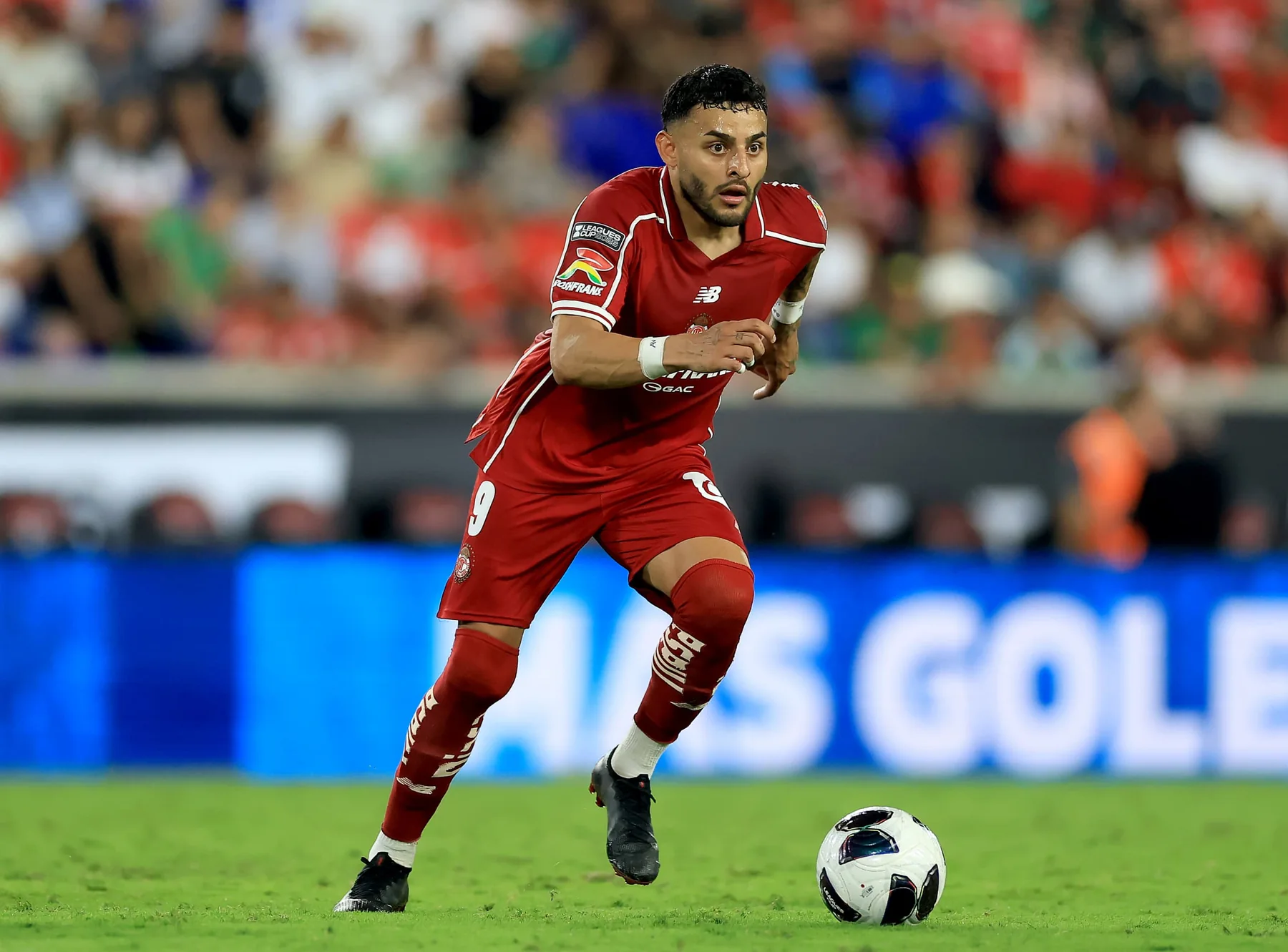
Toluca beat Monterrey 2-0 by controlling the decisive moments
Toluca won the 2026 Leagues Cup final because it was quicker and calmer when the match presented a decisive moment. Monterrey produced pressure and more attempts, but the Diablos Rojos converted two loose-ball situations, protected their penalty area and left Shell Energy Stadium with a 2-0 victory.
The final’s first four minutes explained the difference. Rayados created the first opening when Lucas Ocampos crossed for Hugo Cuypers, whose header passed just wide. Toluca answered immediately and scored. From then on, Antonio Mohamed’s side could defend with a lead, choose when to accelerate and force Monterrey to take greater risks.
Alexis Vega punished the first defensive mistake
Federico Viñas drove Toluca’s first dangerous attack and struck the post. Esteban Andrada was already committed, and the rebound dropped inside the six-yard box. Orbelín Pineda could not settle the ball, while Alexis Vega read the bounce first and finished into the exposed goal. The captain’s second Leagues Cup goal arrived in the fourth minute.
It was a poacher’s goal from a player usually associated with creation. Vega did not wait outside the area for the next phase; he followed the shot and attacked the second ball. That movement turned Viñas’s near miss into the opener. Monterrey had gone from almost leading to chasing the final in little more than a minute.
Rayados did respond. Ocampos found space for a low effort that Hugo González saved, Ricardo Chávez forced a one-handed stop from the goalkeeper, and Everardo López cut out a dangerous Diego Rossi delivery before Cuypers could finish. Monterrey’s attacks carried threat, but Toluca kept winning the final action: the save, clearance or interception that prevented an equalizer.
Helinho finished the final when Rayados chased the equalizer
After halftime, Monterrey pushed higher and circulated the ball faster. That gave Rayados territory but also opened the space Toluca wanted. Around the 70th minute, Franco Romero advanced from behind midfield and released Viñas down the left. Andrada stopped the forward’s shot, yet the rebound ran perfectly to Helinho, who finished left-footed for 2-0.
The second goal was not a random break. It grew from Toluca’s patience: hold shape, invite Monterrey forward, then attack the space behind the pressure with runners already facing goal. Helinho’s finish rewarded that plan and made him the official Player of the Match. Jorge Díaz Price then hit the post as Rayados became even more exposed.
Monterrey continued to send bodies forward, but Ocampos headed wide and Luca Orellano put a late free kick over. Six minutes of added time passed without a genuine twist. Toluca had taken five shots on target and scored twice; more tellingly, it had never let Monterrey’s volume become scoreboard pressure.
Both clubs now return to domestic work. Supporters can check Liga MX games today for their next confirmed fixture and local kickoff time.
The tactical choices that made Toluca so hard to break
Toluca’s control came from choosing where the final would be played. After scoring, the Diablos allowed Monterrey to circulate in less dangerous areas, crowded the central lane and kept two fast outlets ready for the counter. Possession belonged to Rayados for long stretches; the cleaner scoring zones belonged to Toluca.
Mohamed balanced a compact block with fast outlets
A compact block means the defensive lines stay close together, reducing the gaps an opponent can pass or dribble through. Toluca narrowed those distances once Vega put them ahead. Monterrey could switch play and deliver crosses, but it struggled to create repeated central shots with a clear view of goal.
Mohamed did not turn that shape into a retreat. Federico Viñas stayed available to run into the channels, while Helinho offered speed from the opposite side. When a clearance or recovery reached them, Monterrey’s defenders had to turn toward their own goal. That threat discouraged Rayados from committing every player and ultimately created the second goal.
Franco Romero’s contribution on that counter was just as important as the finish. He carried the ball out from behind midfield before releasing Viñas at the right moment. The forward attacked the left side of the area and forced Andrada to make a save. Helinho followed the play rather than admiring it, reaching the rebound with the goal exposed.
The substitutions supported the same idea. Jorge Díaz Price and Diego Barbosa arrived around the hour, then Víctor Guzmán and Luan García entered seven minutes later. Paulinho replaced Helinho after the clinching goal. Fresh legs strengthened the spaces Monterrey was targeting while Díaz Price still offered enough dribbling threat to hit the post on another break.
Hugo Gonzalez and the back line managed Monterrey's pressure
Hugo González made the saves Toluca’s structure still required. He dropped quickly to stop Ocampos soon after the opener and produced a one-handed intervention when Ricardo Chávez attacked a close-range cross. Everardo López supplied the complementary work in front of him, stepping across to prevent Rossi’s delivery from reaching Cuypers.
Monterrey’s best second-half opening was Cuypers’s header after a Jesús Corona cross, but it slid past the post. Later, Ocampos headed a corner wide and Orellano sent a free kick over. Rayados reached the final third, yet the last contact was routinely hurried, contested or pushed toward a low-percentage angle.
That was the broader pattern of Toluca’s tournament. The official final recap credited the Diablos with conceding only two goals across the entire competition. A team with Vega, Viñas, Helinho and Paulinho can overwhelm opponents, but this trophy was also built on defenders accepting pressure without losing spacing.
The same balance now becomes the benchmark for Toluca’s Apertura defense. The Liga MX standings will show whether the Diablos can maintain that defensive discipline through the weekly domestic grind.
Toluca's road to the 2026 Leagues Cup trophy
Toluca did not lift the cup by following a perfect straight line. The champions won twice at home in Phase One, absorbed a narrow defeat in Los Angeles and then produced three consecutive knockout clean sheets. That sequence matters because it shows a team capable of changing the type of match without losing its attacking identity.
Phase One established the platform
The campaign began with a piece of tournament history. Nemesio Diez hosted the first Leagues Cup match played in Mexico, and Toluca marked it by beating 2025 champion Seattle Sounders 3-0. Jesús Gallardo opened the scoring before Helinho and Federico Viñas completed a result that immediately gave the Diablos a strong position.
The trip to Los Angeles delivered the only setback. LAFC won 1-0 through Eddie Segura's late goal, although Toluca finished with 15 attempts to LAFC's nine and placed four shots on target. The defeat exposed the risk of failing to turn territory into a lead, but it did not derail qualification.
Against FC Dallas, Toluca responded within the opening minutes. Alexis Vega converted a penalty, Dallas equalized almost immediately, and Viñas restored the lead in first-half added time. Erick Gutiérrez made it 3-1 soon after the interval. Two home wins and six goals at Nemesio Diez carried Toluca into the quarterfinals.
Austin, Leon and Monterrey fell in the knockout rounds
Austin FC provided a different test at Sports Illustrated Stadium. Joseph Rosales was sent off after a VAR review in the 40th minute, and Helinho converted the penalty. Austin defended with ten players and goalkeeper Brad Stuver made eight saves, but Jorge Díaz Price finished a counter on the final play for a 2-0 victory. Toluca attempted 25 shots and did not allow one on target.
The semifinal against Club León followed the same scoreline. Federico Pereira headed Toluca in front before halftime, then Viñas supplied the second goal in the 69th minute. The Diablos had survived a difficult opening phase, found control and secured an all-Liga MX final without conceding.
Monterrey became the third straight knockout opponent beaten 2-0. Vega's early rebound and Helinho's second-half finish completed a route of five wins and one defeat. More revealing than the raw record was the evolution: Toluca scored freely in its home phase, learned from the LAFC loss and became ruthlessly economical once elimination was one bad night away.
| Stage | Opponent | Result | Toluca scorers |
|---|---|---|---|
| Phase One | Seattle | 3-0 | Gallardo, Helinho, Viñas |
| Phase One | LAFC | 0-1 | — |
| Phase One | Dallas | 3-1 | Vega, Viñas, Gutiérrez |
| Quarterfinal | Austin | 2-0 | Helinho, Díaz Price |
| Semifinal | León | 2-0 | Pereira, Viñas |
| Final | Monterrey | 2-0 | Vega, Helinho |
The cup schedule is over, but Toluca's domestic challenge resumes immediately. The Liga MX schedule this week gives supporters the next kickoff in local time.
How Liga MX took over the tournament after the quarterfinals
Toluca supplied the champion, but Liga MX's 2026 statement was larger than one final. The knockout bracket reached the quarterfinals with four Mexican clubs and four MLS clubs. Every cross-league tie ended with the Liga MX representative advancing, producing the first all-Mexican semifinal field of the modern Leagues Cup era.
Four Mexican clubs eliminated the four MLS quarterfinalists
Monterrey opened the sweep by beating Chicago Fire 2-1. Club León then defeated Real Salt Lake 3-0, the widest margin of the round. Toluca controlled Austin 2-0, and Club América completed the set with a 2-0 win over Columbus Crew. Across four ties, Liga MX clubs scored nine goals and conceded only one.
The format makes that record particularly useful for comparison. Phase One and the quarterfinals were restricted to MLS against Liga MX games, so the last eight represented four direct tests with advancement at stake. No Mexican club needed a penalty shootout in that round, and three won by multiple goals.
There were different winning methods. León overwhelmed RSL, América scored early and protected the advantage, Monterrey found the late edge in a tight game, and Toluca used its numerical advantage with patience. The common theme was game management. Each side handled the pressure of a single-elimination night better than its MLS opponent.
An all-Liga MX podium changed the rivalry narrative
Once the tournament allowed same-league matchups in the semifinals, Toluca beat León 2-0 and Monterrey advanced past América on penalties after a 2-2 draw. León then earned third place by beating América 1-0, with Díber Cambindo heading the 80th-minute winner. The champion, runner-up and third-place finisher were therefore all Mexican.
That podium carried practical value. Leagues Cup awards places in the 2027 Concacaf Champions Cup to its top three finishers, with the champion advancing directly to the round of 16. The four-club semifinal ensured all three tournament berths would stay with Liga MX, subject to the competition's reallocation rules when a club already held a place through another route.
The symbolism was equally strong. Inter Miami, Columbus Crew and Seattle Sounders had won the 2023, 2024 and 2025 editions. Toluca ended that MLS run while León, América and Monterrey showed the shift was broad rather than the work of one exceptional team.
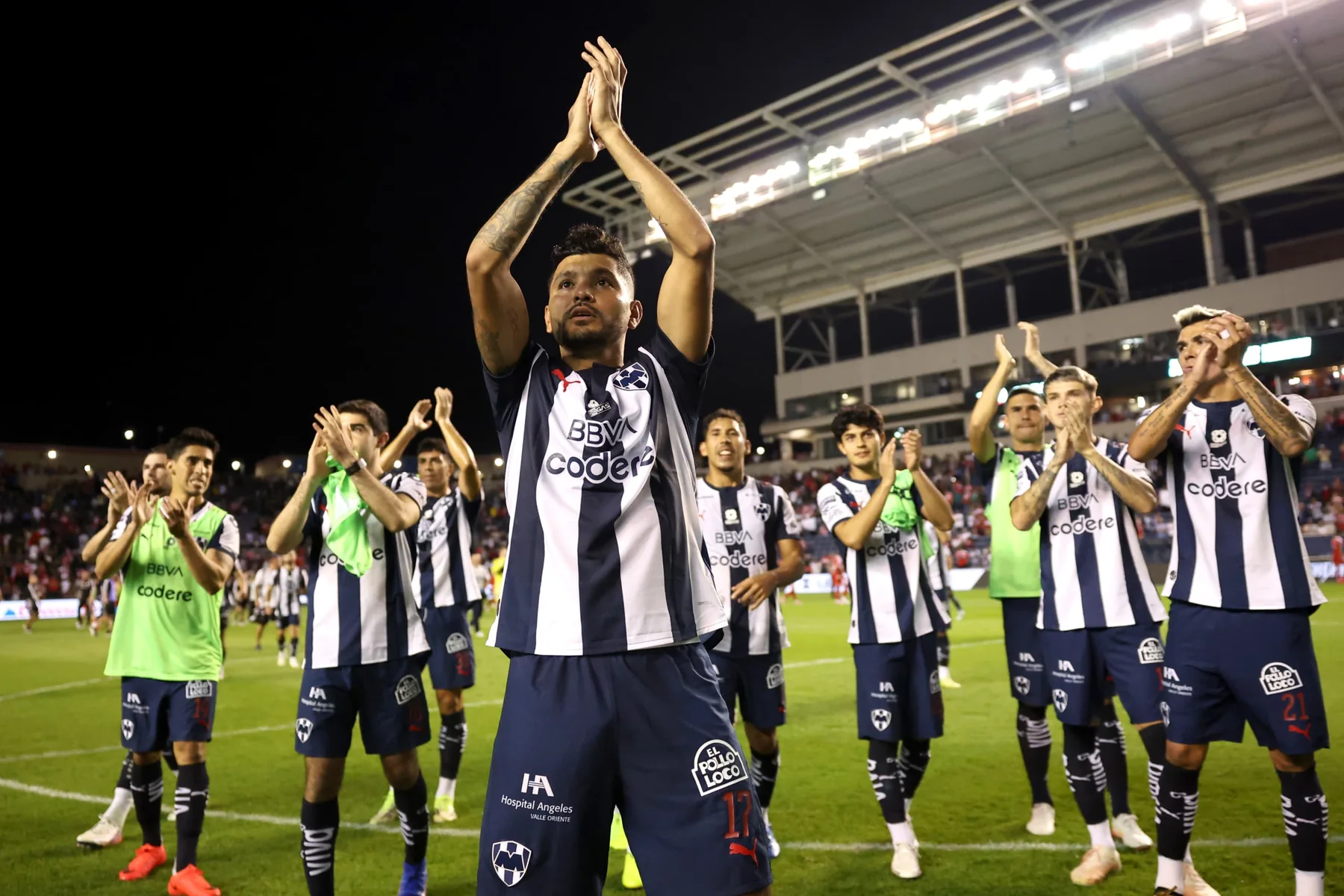
Fans who want to track how the four semifinalists carry this level into domestic elimination games can use the Liga MX Liguilla bracket when the playoff field is set.
What the trophy means for Toluca, Mohamed and the Champions Cup
Leagues Cup is another trophy in Toluca's cabinet, yet its real meaning comes from the company it keeps. Antonio Mohamed's team has now won domestic league titles, champion-versus-champion fixtures and both of the region's major club cups. This is no longer a hot streak measured in weeks. It is an era defined by repeatedly arriving at finals and solving a new opponent.
Six trophies define an extraordinary coaching era
Mohamed took charge before the Clausura 2025 and immediately ended Toluca's long Liga MX title drought. The Diablos then added the 2025 Campeón de Campeones and Campeones Cup, won Apertura 2025, captured the 2026 Concacaf Champions Cup and completed the set with Leagues Cup 2026.
Those trophies demand different skills. A Liga MX championship requires surviving a regular season and a two-leg Liguilla. Campeón de Campeones and Campeones Cup compress the pressure into one occasion. Champions Cup requires home-and-away planning against regional opposition, while Leagues Cup asks a team to navigate short rest, travel and a mixed-league bracket.
Toluca's squad has been flexible enough for all of them. Vega can create or score, Viñas gives the attack a direct running threat, Helinho stretches a back line, and Mohamed adjusts the balance around them. The final against Monterrey offered the clearest summary: an early attack, disciplined defending and a counterattack that finished the contest.
For supporters, six trophies also change expectations. A semifinal is no longer treated as proof that the project is progressing; Toluca is judged by whether it wins the final. That standard is demanding, but it is the natural consequence of a team that has learned how to make high-pressure nights feel familiar.
Toluca's overlapping 2027 qualification routes
Toluca was already in the 2027 Concacaf Champions Cup through its Apertura 2025 title. As the highest-ranked Liga MX champion in the relevant qualification order, it was also listed for a round-of-16 bye. Winning Leagues Cup provides the same direct-entry reward, so the Diablos do not enter the competition twice or gain a second life.
Instead, Concacaf's rule protects the value of the duplicate berth for the league. When a Leagues Cup qualifier has already entered through Liga MX, an additional place goes to the next eligible, unqualified Mexican club according to the applicable regular-season aggregate standings. Toluca keeps its place and bye, while another Liga MX side gains access to the field.
The 2027 edition gives Toluca another test of its staying power. The club will arrive as defending Champions Cup winner after earning its third regional title in 2026. The Leagues Cup final showed it can beat a familiar Mexican rival in a one-off match; defending the continental crown will again require managing different styles across several rounds.
Toluca's reward
A confirmed 2027 Champions Cup place and direct entry to the round of 16.
Liga MX's reward
An extra berth passes to the next eligible unqualified club when Toluca's routes overlap.
For a full explanation of the domestic and regional routes, read how Liga MX clubs qualify for the Concacaf Champions Cup. The current Liga MX standings provide the domestic table context.
Comments
Comments are reviewed before publication.
Sign in with Google to comment. Spam, abusive content, personal information and policy-violating links are not published.
Sign in with Google to comment or reply.
Loading comments…