
Liga MX analysis
Toluca’s 2026 Leagues Cup title gave Liga MX the result its supporters wanted. It did not erase the argument about venues, travel, automatic participation and a format built to manufacture equal league representation.
Toluca’s 2026 Title Settled the Trophy, Not the Argument
Toluca deserved to win the 2026 Leagues Cup. The Diablos beat Monterrey 2–0 in Houston, survived Rayados’ strongest spells and punished the moments when the final opened. That sporting answer can sit beside another truth: many Liga MX supporters still dislike how the tournament is built.
A deserved 2–0 win ended the modern Liga MX drought
Alexis Vega reacted first after Federico Viñas struck the post, giving Toluca an early lead. Monterrey then pushed, crossed and forced Hugo González into saves, but Antonio Mohamed’s team stayed compact. With 20 minutes left, Toluca broke forward, Viñas drew another save and Helinho finished the rebound. The second goal rewarded control of the decisive spaces rather than control of every possession.
The victory made Toluca the first Liga MX champion since the competition adopted its expanded modern format in 2023. It did not make Toluca the first Mexican winner in all Leagues Cup history; León and Cruz Azul won earlier versions. That distinction matters because celebratory headlines can accidentally erase the tournament’s pre-2023 record.
The final was also the last step in a powerful Mexican knockout run. Toluca, León, Club América and Monterrey took all four semifinal places. Liga MX had arrived at the business end with four different tactical profiles and guaranteed its first champion of the modern era before the semifinal balls were kicked.
Winning under the rules does not make every rule fair
None of the criticism reduces Toluca’s achievement. Every participant knew the points system, the separate tables and the route to Houston. Toluca traveled, beat MLS opposition, won an all-Mexican knockout path and handled the final better than Monterrey. The trophy is legitimate.
The disagreement concerns the competition around that trophy. A team can win a difficult away tournament while its supporters still ask why most Mexican clubs never host, why every Liga MX side must enter and why an August event interrupts the domestic story. Success answers whether the champion adapted. It does not automatically answer whether the burden was distributed evenly.
That is why the post-final mood contains celebration and complaint at the same time. Supporters can enjoy Vega lifting another cup, then look at Toluca’s place in the Liga MX standings and resume the Apertura debate. Winning gave Mexican football stronger standing in the argument. It did not end the argument.
The 2026 Leagues Cup Made Real Improvements
The criticism is stronger when it acknowledges what changed. The 2026 edition was not a copy of the original expanded event. Organizers brought matches to Mexico for the first time, rewarded stronger Liga MX ranking positions with better logistics and kept three genuine Concacaf Champions Cup places attached to the finish.
Four matches in Mexico finally broke the hosting pattern
Toluca hosted two Phase One matches at Estadio Nemesio Diez. Tigres hosted one at Estadio Universitario, and Club América hosted one in Mexico City. Those four fixtures mattered symbolically and competitively. MLS clubs finally had to deal with Liga MX crowds, travel south and the atmosphere that Mexican teams routinely face when they cross the border.
The reward was connected to performance. Toluca, Tigres and América were the top three Liga MX clubs in the competition ranking. Cruz Azul received a neutral-site match, while Monterrey and Pachuca gained reduced-travel arrangements. That approach at least recognized that domestic achievement should improve a club’s path.
The Athletic also reported that the 2025 redesign had reduced travel and shortened the dead period for teams eliminated early. Former Atlas coach Gonzalo Pineda said that version protected domestic rhythm better than the earlier format. The 2026 home matches extended that reform. Supporters who say nothing improved overlook genuine movement.
Concacaf Champions Cup places created meaningful stakes
Leagues Cup was not merely an exhibition series with a sponsor’s trophy. The champion, runner-up and third-place finisher qualified for the 2027 Concacaf Champions Cup, and the winner earned direct entry to the round of 16. That benefit can save a club an elimination round and place it closer to the region’s route toward FIFA competition.
For squads already qualified through Liga MX, the allocation rules could create an additional domestic place rather than wasting one. For clubs outside those routes, the knockout rounds offered a second sporting door. That is a credible incentive for coaches to field strong teams and for supporters to care about a third-place game.
| Issue | Earlier concern | 2026 response |
|---|---|---|
| Hosting | Liga MX always traveled | Four Phase One games in Mexico |
| Travel | Repeated long moves | Ranking-based relief for six clubs |
| Stakes | Commercial showcase label | Three Champions Cup places |
The question is therefore about scale, not whether reform existed. Fans can place the August–September block on the Liga MX calendar and use the TV schedule to follow it. Four home matches and real qualification value made 2026 better. They did not make every remaining objection disappear.
The Home-and-Travel Imbalance Is Still the Loudest Complaint
Travel is where an abstract fairness argument becomes a player’s daily routine. Most MLS participants sleep at home or move within a familiar domestic system. Most Liga MX participants cross a border, live in hotels and prepare on borrowed training grounds. Better routing can reduce that difference; it cannot remove it while hosting remains overwhelmingly in the United States.
Old travel numbers explain why distrust became entrenched
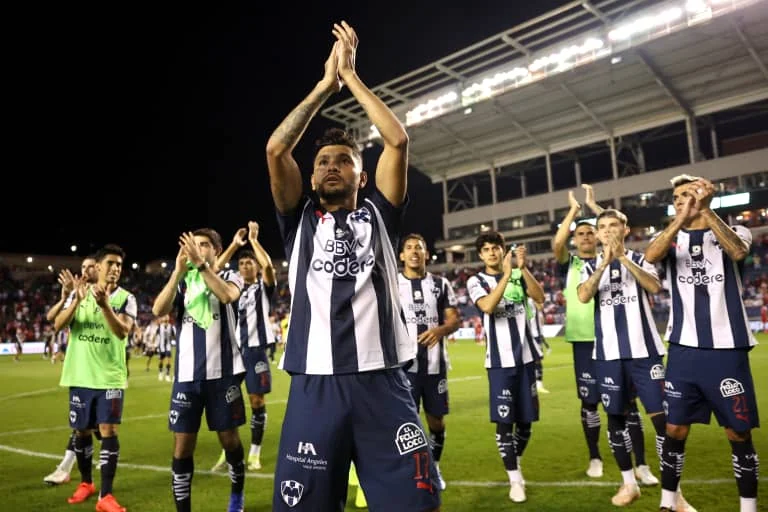
An AS analysis during the 2023 event estimated that the 18 Liga MX clubs had traveled 69,495 kilometers through the round of 16, more than twice the 33,995 kilometers attributed to 29 MLS clubs. Nine MLS teams had not left their own stadiums. Those figures belong to 2023 and should never be presented as a measurement of the improved 2026 format.
They still explain the memory supporters bring to every new edition. Monterrey moved repeatedly across the United States while later opponents kept normal home routines. Once a competition establishes that pattern, organizers need more than a press release to rebuild trust. Each venue list is judged against the image of one team unpacking again while the other drives home.
The workload is wider than flight time. Border procedures, hotel meals, unfamiliar recovery rooms and changing time zones reduce the hours available for tactical work. None guarantees defeat; Toluca’s title is proof that a strong team can master the burden. Fairness, however, asks whether mastering an unequal burden should be the default test for one league.
Four home matches cannot balance a 36-club tournament
The 2026 reform gave Toluca two home games and Tigres and América one each. That left 15 Liga MX clubs without a Phase One match in their own stadium. Four of 54 opening-phase fixtures were played in Mexico; the later rounds returned the decisive path to U.S. venues.
Tijuana coach Sebastián Abreu made the objection current after his team’s 2026 elimination. He praised the competition’s visibility and level, yet argued that constant movement caused serious physical wear while MLS opponents could recover with their normal home routines. His point was not that Mexican clubs should avoid difficult away days. It was that both sides of a cross-border cup should experience them.
That is the reform many supporters are waiting for: a schedule where Seattle can visit Toluca and Tijuana can visit Portland, with hosting distributed beyond three rewarded clubs. Place the trip beside each team’s domestic work on the weekly Liga MX schedule. The complaint survives because the away burden is still a structural feature, even after 2026 proved it can be overcome.
Mandatory Entry and August Timing Frustrate Club Supporters
The next complaint begins before a ball is kicked. Every Liga MX club enters Leagues Cup, whether its previous domestic season earned an international place or not. The tournament then arrives immediately after the first Apertura rounds, asking supporters to switch tables, opponents and broadcast routines just as a new league story is forming.
All Liga MX clubs enter while MLS clubs qualify
The 2026 field contained 18 teams from each league, which looks symmetrical on a graphic. The routes were different. All 18 Liga MX clubs participated. MLS sent the top nine teams from each conference that had qualified for the previous season’s playoffs. One side offered its entire first division; the other offered a performance-filtered half of a larger league.
Automatic entry has advantages. Every Mexican fan base gets a cross-league matchup, broadcasters can schedule the biggest brands and a struggling domestic club receives another route to the Concacaf Champions Cup. It also weakens the idea that continental competition must be earned. A supporter whose club needs league points may reasonably ask why travel to an additional tournament is compulsory rather than a reward for a strong Apertura or Clausura.
This is not proof that the clubs were unwilling participants. Liga MX co-organizes the event, and teams knew the entry rules. It is a fan-priority dispute: should commercial reach guarantee every club a place, or should domestic results decide who represents the league? Equal numbers do not settle that question when the qualification standards differ.
A month-long competition cuts across the Apertura story
The calendar needs careful wording. Liga MX did not stop for the entire August 4–September 6 Leagues Cup window. It paused for 13 days around Phase One and returned with Matchday 4 from August 15–17. The Leagues Cup quarterfinals began August 25, so surviving clubs then moved between domestic matches and knockout travel.
That system is better than leaving eliminated clubs inactive for weeks, a problem reduced by the 2025 redesign. It creates another kind of fragmentation. Some teams return to a normal training week after three matches; contenders maintain two competitions, travel again and may need league dates adjusted. Toluca and Monterrey finished in Houston on September 6 and immediately turned toward league opponents.
For supporters, momentum becomes harder to read. An Apertura begins, pauses, restarts with clubs carrying different fatigue, and shares attention with Tuesday or Wednesday knockout games. A month of exciting football can still feel like a detour from the title race. The weekly schedule and full Liga MX calendar make the overlap visible. Fans are reacting to divided rhythm, not claiming there was a full month without league football.
Separate League Tables Make the Rivalry Feel Engineered
Leagues Cup calls itself an interleague test, yet Phase One does not produce one combined table. Liga MX clubs compete for four places against other Liga MX results; MLS clubs do the same on their side. The design protects an equal quarterfinal and guarantees the rivalry survives, even if one league has clearly won more opening matches.
Four quarterfinalists per league are guaranteed
Each club played three opponents from the other league. A regulation win earned three points, a penalty-shootout win after a draw earned two, and the shootout loser kept one. The unusual part came after the points were counted: the top four Liga MX teams and top four MLS teams advanced from separate standings.
That arrangement makes the quarterfinals easy to sell. Four MLS–Liga MX ties are guaranteed, and neither league can disappear before that round. It also means advancement is relative. A club can finish fifth in a strong league table with more points than the fourth qualifier on the other side and still go home. The system values balanced representation above a single merit order.
There is no hidden rule here; the format was published. The complaint is philosophical. If the tournament’s purpose is to discover the best club, some supporters prefer one combined table. If its purpose is to stage a repeatable league-versus-league product, separate tables make commercial and competitive sense. Organizers have chosen the second priority.
The all-Mexican semifinals told a different story from Phase One
The 2026 numbers prevent either side from claiming a simple sweep. Across the 54 Phase One games and four interleague quarterfinals, MLS clubs won 32 and Liga MX clubs won 26. MLS therefore won more of the direct meetings. Liga MX, however, won all four quarterfinals: Monterrey beat Chicago, León eliminated Real Salt Lake, Toluca defeated Austin and América beat Columbus.
The first measure says MLS had the better tournament-wide head-to-head count. The second says Liga MX’s best survivors controlled the round that ended seasons. Both matter. Supporters who had watched Mexican clubs struggle in the expanded event finally saw four teams respond under knockout pressure. Supporters skeptical of the early format could still point out that equal quarterfinal representation had been guaranteed before those victories.
Toluca then finished the job, so the engineered bracket produced a champion with a fully earned knockout record. A clearer future system could keep the cross-league excitement while allowing points to determine all eight qualifiers. Until then, fans comparing the special table with the Liga MX standings are right to notice that “best four” means something different in each competition.
A Better Leagues Cup Must Share the Football More Evenly
The 2026 edition showed that Leagues Cup can change. It brought four matches to Mexico, reduced some travel and ended with a Liga MX champion. The next version can keep the genuine rivalry and Concacaf stakes while distributing its football more evenly. No 2027 format was official at the time of this review, so these are standards for reform, not announced rules.
More Mexican hosting would improve sporting and fan balance
Four matches proved the operational barrier is not absolute. MLS teams traveled to Toluca, Monterrey and Mexico City, and the tournament gained atmospheres that could not be recreated at a U.S. neutral site. The obvious next step is reciprocal hosting on a larger scale.
One option is to use the ranking already built into the competition: the higher seed hosts, regardless of league. Another is to split Phase One fixtures evenly by country and rotate the final. A third is to guarantee every Liga MX entrant at least one home date. Each would force both leagues to manage away environments and give Mexican supporters a reason to experience the event directly rather than mainly through television.
Venue balance also improves the football. An MLS side dealing with altitude in Toluca, heat in Monterrey or the pressure of a major Mexico City crowd is being tested by the region, just as a Liga MX club learns from a long U.S. trip and an unfamiliar surface. A cross-border cup should make those conditions part of both leagues’ challenge.
Qualification and calendar rules should reward domestic performance
Leagues Cup could match entry standards by asking Liga MX clubs to qualify through the previous Apertura and Clausura, as MLS participants qualify through their playoff field. Fewer teams would reduce fixture volume, allow clearer travel planning and make the place itself valuable. If organizers keep all 18 Mexican clubs, domestic performance could at least decide more home games and byes.
A combined Phase One table would let points choose the best eight teams. If equal league representation remains central, organizers should say plainly that preserving the rivalry is part of the sporting product. Transparency will not satisfy everyone, but it lets fans judge the tournament for what it intends to be.
- Share home games: make away travel reciprocal across both leagues.
- Reward results: use domestic performance for entry, hosting or byes.
- Protect recovery: publish rest windows and travel expectations with the draw.
- Keep the stakes: retain meaningful Champions Cup qualification.
Liga MX supporters are not rejecting international competition. Their continuing interest in a possible Copa Libertadores return proves how much difficult cross-border football can mean. They are asking for conditions that make the challenge credible. When the next format appears, compare it with the confirmed Liga MX calendar: who hosts, who travels, who qualified and how much recovery exists.
Toluca should be celebrated as the 2026 champion. The strongest tribute to that run is a competition where future winners face a burden both leagues recognize as shared. If Leagues Cup reaches that point, the argument can move from fairness to football.
Comments
Comments are reviewed before publication.
Sign in with Google to comment. Spam, abusive content, personal information and policy-violating links are not published.
Sign in with Google to comment or reply.
Loading comments…