How this ranking defines the best Liga MX teams
América is the clear historical No. 1 if “best” means the active Liga MX club with the most professional-era league championships. The answer changes when a fan asks who is hottest now, who has the strongest Concacaf record, or which identity is most compelling to follow. Those are legitimate debates, but they should not be folded into one unexplained list.
This ranking therefore starts with completed Mexican league championships through Clausura 2026, the cleanest answer to “which active clubs have won Liga MX most often?” Popularity, runner-up finishes, transfer spending, Copa MX, Concacaf tournaments, and three weeks of Apertura form do not alter that historical count. They matter in their own lanes, so the later sections show how the order changes when the question changes.
League titles are the historical anchor
The count begins with Mexico’s national professional era in 1943-44. Every completed league championship counts once, whether it came through a long-season format or one of the modern Apertura and Clausura short tournaments. Starting at the same historical line keeps the comparison consistent, while counting only league crowns avoids quietly favoring a club because another competition existed more often in one era than another.
This choice also makes ties honest. If two clubs own the same number of league titles, they share the same title-based position. We do not invent a tiebreaker from fan estimates, final appearances, or cup wins merely to force every row into a unique rank. Instead, the club profiles explain why two teams with equal domestic totals can still feel very different in a debate about modern relevance or international stature.
Recent form, international success, and cultural reach are separate lenses
| Lens | What it answers | What it cannot prove alone |
|---|---|---|
| League titles | Long-run domestic championship success | Who is strongest in the current Jornada |
| Recent trophies | Which projects have converted form into titles lately | A club’s full historical stature |
| International honors | Performance beyond the domestic league | Week-to-week Liga MX strength |
| Reach and identity | Why a club matters to communities and audiences | An objective sporting order |
The practical rule is simple: use the title table for historical domestic success, the recent-champions section for momentum, and the live Liga MX standings for the tournament happening now. Keeping those answers separate makes the ranking more transparent—and more useful—than pretending one number settles every version of the debate.
Liga MX teams ranked by professional-era league titles
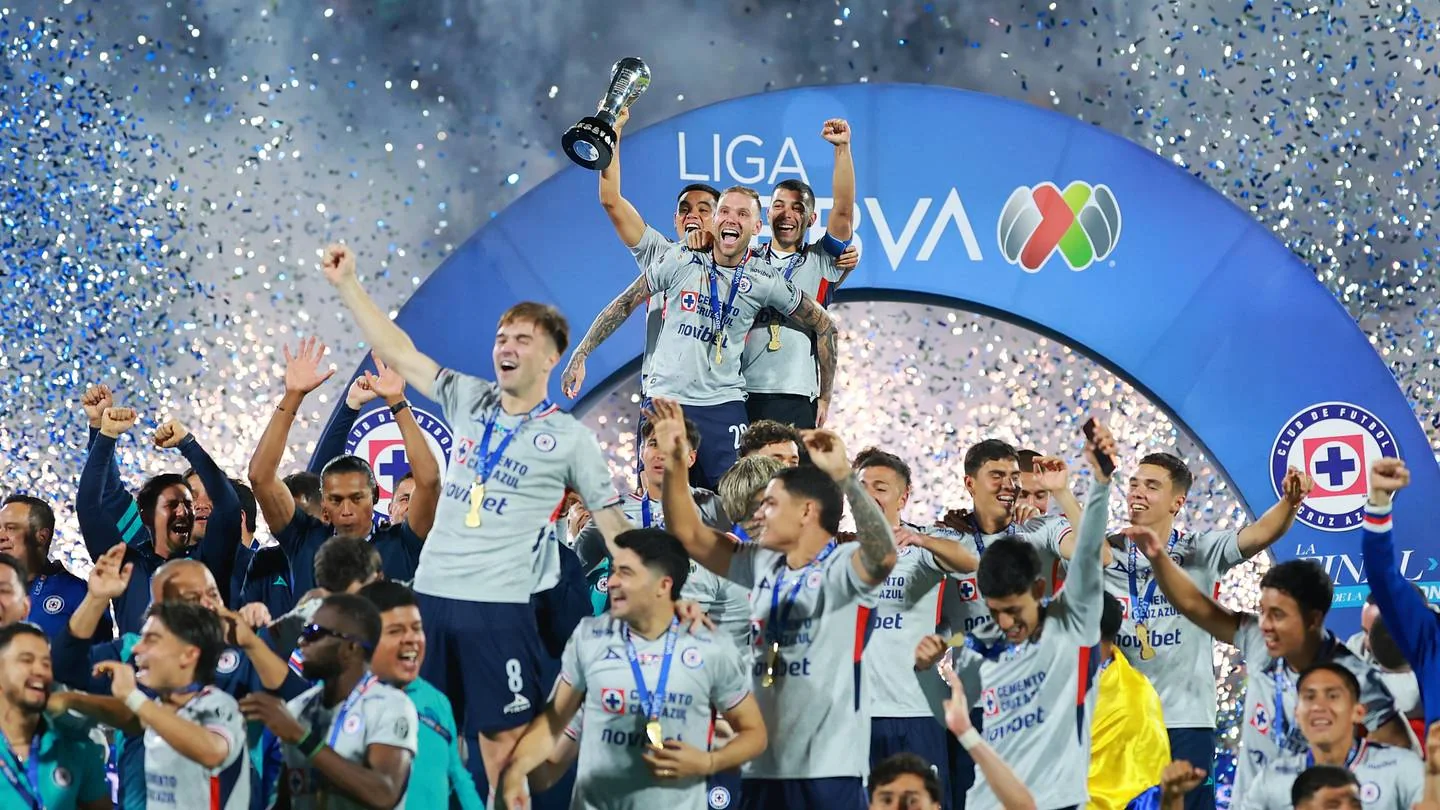
América leads the active Apertura 2026 clubs with 16 professional-era league titles. Guadalajara and Toluca share second with 12, while Cruz Azul’s Clausura 2026 championship lifted La Máquina to 10 and sole possession of fourth. Equal totals share a position; the most recent title adds context but does not rewrite the historical count.
| Rank | Club | League titles | Most recent | Team schedule |
|---|---|---|---|---|
| 1 | América | 16 | Apertura 2024 | View |
| 2= | Guadalajara | 12 | Clausura 2017 | View |
| 2= | Toluca | 12 | Apertura 2025 | View |
| 4 | Cruz Azul | 10 | Clausura 2026 | View |
| 5= | León | 8 | Guardianes 2020 | View |
| 5= | Tigres UANL | 8 | Clausura 2023 | View |
| 7= | Pumas UNAM | 7 | Clausura 2011 | View |
| 7= | Pachuca | 7 | Apertura 2022 | View |
| 9 | Santos Laguna | 6 | Clausura 2018 | View |
| 10 | Monterrey | 5 | Apertura 2019 | View |

América leads Guadalajara and Toluca
América’s 16 league titles create a four-championship lead over the nearest active challengers. The total also captures success across very different competitive eras: long seasons, early Liguilla formats, and the modern two-tournament calendar. Guadalajara and Toluca share second with 12, but their recent histories point in opposite directions. Chivas last won in Clausura 2017; Toluca reached 12 by winning Apertura 2025 after also taking Clausura 2025.
That contrast is exactly why the last-title column is informative without becoming a tiebreaker. Guadalajara’s historical total remains level with Toluca’s, while Toluca owns the stronger recent championship sequence. A reader asking about all-time league success should call them tied; a reader asking about the latest completed run should discuss Toluca first.
Cruz Azul's tenth title reshaped the top four
Cruz Azul entered the Clausura 2026 final with nine league crowns, then defeated Pumas 2-1 in the decisive leg to win the series by the same aggregate score. The result moved La Máquina into double figures and sole possession of fourth place. It now sits two titles behind both Guadalajara and Toluca and six behind América under this domestic measure.
Below that top four, three ties show why forced ordering would be misleading. León and Tigres each have eight; Pumas and Pachuca each have seven. Their peaks came in different decades and their international records differ, but none of that changes the league-title arithmetic. Those differences belong in the interpretive sections that follow.
What the title table says about each top club
Equal title totals do not always describe equal histories. One club may have won across generations, another may have built a concentrated modern dynasty, and a third may carry a long current drought despite an elite total. The profiles below show the shape behind the number, including where international success strengthens a club’s case beyond Liga MX trophies.
América, Guadalajara, Toluca, and Cruz Azul
América · 16
The leader combines championships from multiple eras with the only three-title streak of the short-tournament age, completed across Apertura 2023, Clausura 2024, and Apertura 2024. Its margin is not a product of one isolated dynasty; it is repeated domestic relevance.
Guadalajara · 12
Chivas built much of its stature during an earlier period of dominance and carries a nationally resonant Mexican-player tradition. The current total remains elite even though the wait since Clausura 2017 makes its recent league record quieter than its historical standing.
Toluca · 12
Toluca’s profile joins an exceptional short-tournament legacy to an immediate modern revival. The Diablos won both Clausura and Apertura 2025, reaching 12 and turning what had been a long wait into the strongest back-to-back league achievement among the current leaders.
Cruz Azul · 10
La Máquina’s five-title 1970s core remains central to its history, but the latest total is not only nostalgic. Titles in 2021 and 2026 bookend repeated recent Liguilla runs, and the tenth crown gives Cruz Azul a clear numerical place between the 12-title pair and the eight-title pair.
León, Tigres, Pumas, Pachuca, Santos, and Monterrey
León and Tigres · eight each: León connects early professional-era success to modern titles, including Guardianes 2020. Tigres’ total has a more concentrated shape: most of its championships arrived during the club’s 2010s transformation, which makes it a powerful answer when the time horizon is “modern Liga MX” rather than the full professional era.
Pumas and Pachuca · seven each: Pumas’ university identity and historic peaks support its place in the traditional “grandes” discussion, but the club has waited since Clausura 2011 for another league crown. Pachuca’s league count is equal, while its international record and academy reputation make the Tuzos look stronger when the question extends beyond domestic championships.
Santos Laguna · six: Santos achieved six championships in a comparatively compact club history, a reminder that frequency and total are different ways to read success. Its last league title was Clausura 2018, so the historical efficiency argument is stronger than a current-form claim.
Monterrey · five: Rayados closes this top ten under the league-only method. Five domestic titles place it below several rivals, but sustained investment, final appearances, and Concacaf success mean an all-honors list would treat Monterrey more generously.
Geography helps explain how these identities developed. Use the Liga MX teams map to connect each profile to its city, stadium, and regional rivalry. The title table tells you who won; place and supporter culture help explain why those wins carry different meanings.
Which Liga MX clubs have the strongest recent case
Change the time horizon and the answer changes quickly. The three most recently completed league tournaments—Clausura 2025, Apertura 2025, and Clausura 2026—produce a compact recent-success picture: Toluca won the first two, then Cruz Azul won the third. That does not erase América’s 16 titles or Guadalajara’s 12. It answers a narrower question about which projects have converted performance into the latest championships.
Toluca's 2025 double and Cruz Azul's 2026 title
Two of the last three
Toluca
Toluca ended a long league-title wait by beating América for Clausura 2025, then defended the crown in Apertura 2025. The official club record notes a 37-point Clausura regular season and 101 league goals across the two 2025 tournaments, evidence that the double joined knockout success to sustained attacking production.
Reigning completed champion
Cruz Azul
Cruz Azul followed repeated deep runs with the Clausura 2026 trophy. The club’s own review records a fifth consecutive semifinal and a tenth league championship. A separate season-long measure also placed La Máquina first on 68 aggregate points in 2025-26, one ahead of Toluca, showing consistency as well as final-series conversion.
Those achievements justify calling Toluca and Cruz Azul the strongest completed-title cases entering Apertura 2026. They do not guarantee the next result. Rosters, injuries, coaching, travel, Leagues Cup demands, and the short-tournament playoff structure can move the competitive order within weeks.
Why a short time horizon changes the order
A three-tournament window rewards the work happening now. It elevates Toluca’s double and Cruz Azul’s title while pushing clubs with larger lifetime totals but no recent crown lower. Expand the window to a decade and Tigres’ modern dynasty gains weight. Expand it to the complete professional era and América, Guadalajara, Toluca, and Cruz Azul return to the front. None of those views is fraudulent; the misleading move is presenting one without disclosing its time frame.
For the competition unfolding today, skip historical shortcuts altogether. The live standings show present table position, while the Liguilla tracker becomes the relevant test once the postseason begins.
Why international trophies and rivalries change the debate
Domestic league championships are only one arena in which a Mexican club can establish stature. Concacaf competition tests teams against leading clubs from the rest of the region, while rivalries reveal which matches carry meaning far beyond the points available on a given night. Adding either lens changes the conversation—but only if it is shown separately rather than slipped into an arbitrary weighted score.
Concacaf success rewards a different kind of strength
| Club | Liga titles | Concacaf Champions Cup titles | What changes |
|---|---|---|---|
| América | 16 | 7 | Leads domestically and shares the continental record |
| Cruz Azul | 10 | 7 | Moves level with América in the region |
| Pachuca | 7 | 6 | Looks much stronger than its shared domestic rank |
| Monterrey | 5 | 5 | International record challenges its tenth-place league total |
Concacaf’s official records place América and Cruz Azul together on seven Champions Cup titles, followed by Pachuca on six; Monterrey’s five are another reason Rayados cannot be dismissed as merely the tenth team in a domestic table. Pachuca also owns a rare achievement outside Concacaf through its 2006 Copa Sudamericana win. These results reward continental knockout performance, travel, and success against a different opponent pool.
Rivalries, reach, and identity cannot be reduced to a trophy total
América–Guadalajara remains the Clásico Nacional because the fixture combines two vast followings, contrasting traditions, and decades of competitive history. Tigres–Monterrey turns the Clásico Regio into a defining event for its metropolitan area, while América–Pumas and América–Cruz Azul connect the capital’s major identities. Their significance is visible in attention, travel, family loyalties, and the pressure placed on players—not in a neat championship column.
That cultural lens is valuable precisely because it is not an objective ranking. Audience estimates vary by market and method; personal identity cannot be audited like a final score. Use the weekly schedule to find the next rivalry and the Liga MX TV schedule to see how to watch it. Experiencing the match often explains a club’s scale better than another invented ranking point.
How to choose the best Liga MX team for you
The historical leader does not have to become your club. A durable connection usually begins with something more personal: a city you know, a family link, a football identity you admire, or a rivalry that makes an ordinary fixture feel consequential. Treat the rankings above as context, then use the choices below to find the team you will still want to follow when it is tenth rather than first.
Match the club to place, identity, and rivalry
| Your priority | A useful starting point | What to investigate next |
|---|---|---|
| A connection to place | Start with the nearest club or a city that matters to you | Stadium, neighborhood, travel, and local derby |
| Historical success | Compare América, Guadalajara, Toluca, and Cruz Azul | The eras in which the titles were won |
| A current winning project | Begin with Toluca and Cruz Azul, then check the live table | Roster turnover and the next completed tournament |
| A defining rivalry | Watch a Clásico Nacional, Regio, Capitalino, or Joven | Which atmosphere and club story feel meaningful |
| Continental ambition | Study América, Cruz Azul, Pachuca, and Monterrey | Concacaf record and current qualification |
Geography is the easiest filter if you are new to Mexican football. The Liga MX teams map connects clubs to their cities, while a few full matches reveal far more than highlight clips. Pay attention to supporter culture, how the team approaches pressure, and which opponents change the mood. Those repeatable experiences are a firmer foundation than choosing only because a club happens to be leading this month.
Check whether you can follow the team consistently
Liga MX viewing is unusually practical to consider because home-match media rights are arranged club by club. The correct outlet can therefore depend on which team is at home as well as the country from which you are watching. A static channel label attached to a club will eventually mislead; confirm each fixture on the current TV schedule.
A simple two-week test
- Open the Liga MX calendar and select two upcoming matches for the club.
- Verify the kickoff time and legal broadcaster for your location.
- Watch one home match and one away match, because the available network may change.
- Read the table and one reliable club report afterward, then decide whether you want to return for the next round.
If one team combines a story you care about with matches you can actually follow, you have a better answer than any universal power ranking can supply. América is first in professional-era league titles; Toluca and Cruz Azul own the strongest latest championship sequence used here; Pachuca and Monterrey rise when continental success matters. The best Liga MX team for you is the one whose specific case survives all those distinctions and keeps you engaged across an entire tournament.
Comments
Comments are reviewed before publication.
Sign in with Google to comment. Spam, abusive content, personal information and policy-violating links are not published.
Sign in with Google to comment or reply.
Loading comments…