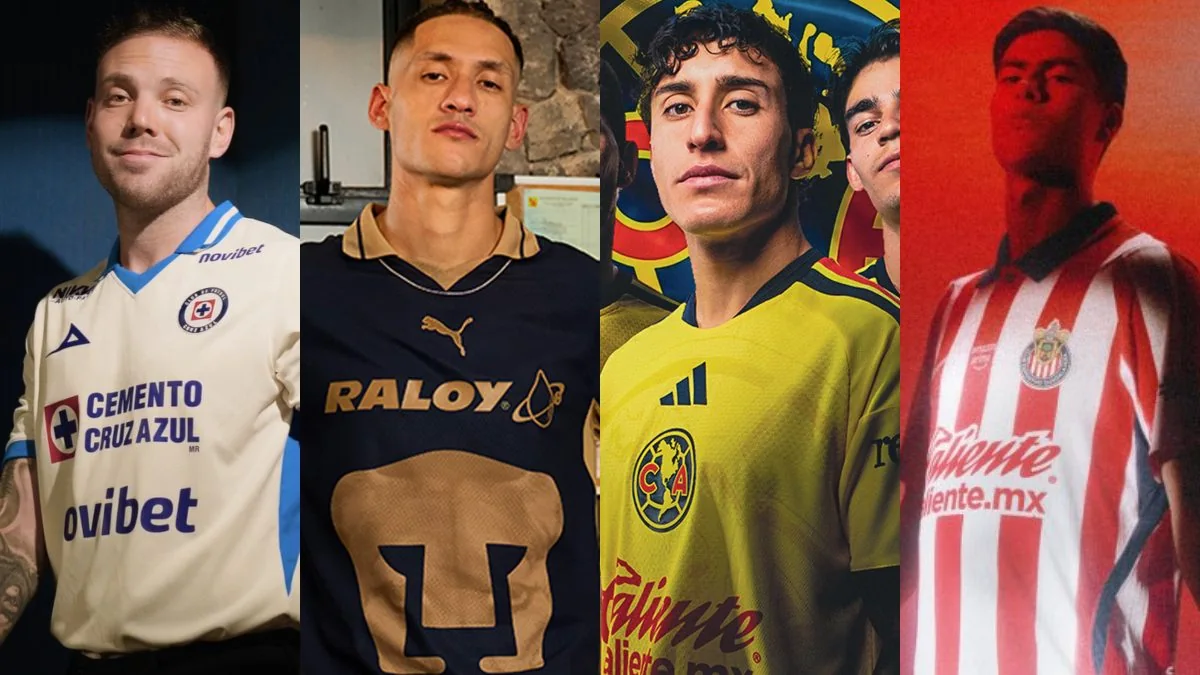
Liga MX's 2026-27 jersey class gives every supporter a familiar home identity, but not a uniform shopping experience: the 18 clubs are split across ten manufacturers. This guide starts with the shirt you should recognize from the stands, then explains the stories and buying checks that matter before you order.
Every Liga MX 2026-27 home jersey and manufacturer at a glance
Here is the quick answer: Charly supplies more Liga MX clubs than any other brand, yet no manufacturer controls the league. Adidas, Nike, PUMA and New Balance share the same competition with Mexican labels Charly, Pirma and Voit, plus Joma, Reebok and Skechers. That mix is why a search for Mexican soccer teams jerseys can produce dramatically different fits, prices, store networks and product names even when every listing says “official.”
The 2026-27 label describes the football-year collection introduced around Apertura 2026 and generally intended to carry into Clausura 2027. It does not guarantee that every size, version or color will remain in stock for the full year. For the broader picture of who the 18 clubs are and where they play, use our Liga MX teams and cities map.
The complete 18-club home kit table
This table pairs each club with its 2026-27 manufacturer and the visual cue that identifies the home shirt. “Home identity” is deliberate wording: sponsor applications and small retail details can vary by product version, while the defining color or stripe pattern remains the useful match-day reference.
| Club | 2026-27 brand | Recognizable home identity |
|---|---|---|
| América | Adidas | Bright yellow with blue-and-red heritage details |
| Atlante | Charly | Vertical blue-and-garnet stripes |
| Atlas | Charly | The classic red-and-black split |
| Atlético de San Luis | Charly | Red-and-white stripes with navy trim |
| Chivas | Nike | Five clean red stripes on white |
| Cruz Azul | Pirma | Celeste blue with a white polo collar |
| FC Juárez | Joma | Vivid Bravos green with black accents |
| León | Charly | Emerald green with tonal line work |
| Monterrey | PUMA | Vertical royal-blue-and-white stripes |
| Necaxa | Voit | White base built from red lightning-like stripes |
| Pachuca | Skechers | Tuzo blue-and-white vertical stripes |
| Puebla | Pirma | White with the unmistakable blue sash |
| Pumas | PUMA | Deep blue dominated by the gold puma |
| Querétaro | Skechers | Blue-and-black club palette with local motifs |
| Santos Laguna | Charly | Green base crossed by two white bands |
| Tigres UANL | Adidas | Yellow with a central blue TIGRES band |
| Tijuana | Reebok | Xolos red-and-black identity |
| Toluca | New Balance | Devils red with fine white detailing |
What the ten-brand supplier field tells fans
Charly's five teams—Atlante, Atlas, Atlético de San Luis, León and Santos Laguna—make it the largest supplier group. Adidas has América and Tigres; Pirma has Cruz Azul and Puebla; PUMA has Monterrey and Pumas; Skechers has Pachuca and Querétaro. The other five brands each have one club. That count is more than trivia. A supporter buying América and Atlas shirts, for example, should not expect identical size labels, fabric language or delivery options simply because both products are Liga MX jerseys.
The variety also protects something Liga MX does especially well: clubs can look like themselves. A single league-wide template does not flatten Atlas's halves, Puebla's sash, Pumas's giant chest emblem or Tigres's central band. The maker logo changes, but the strongest shirts begin with the visual grammar supporters already recognize from the upper deck.
Traditional stripes and colors still anchor the league's look
The 2026-27 home shirts that will age best are the ones a fan can identify before reading the crest. Manufacturers have room to adjust collars, textures and trim, but Liga MX's visual map still starts with Chivas red and white, Rayados blue and white, América yellow, Pumas blue and gold, and the distinct green languages of León and Juárez.
That is useful beyond aesthetics. If you are buying one jersey to wear for several seasons, a home design tied closely to the club's permanent colors will usually remain legible after sponsor arrangements and secondary collections change. It also makes the shirt an immediate piece of match-day information when you check today's Liga MX games.
Stripes remain the fastest club identifier
Chivas provides the clearest example. Nike's first home shirt of the new partnership uses five red vertical stripes on white, a clean treatment that the club itself presents as a link between generations. A brand change could have encouraged a reset; instead, the design makes the Rebaño's established code the point. Supporters can pair the jersey with the Chivas schedule without needing a launch slogan to know what they are looking at.
Monterrey reaches the same result in albiazul—blue and white—with a different stripe rhythm and a distinctly northern setting. Atlante's blue-and-garnet bands mark the Potros' return, while Pachuca retains the Tuzos' blue-and-white vertical structure. Atlético de San Luis also plays in red and white, but navy trim, crest and local context prevent it from reading as a Chivas copy. Puebla then breaks the vertical pattern entirely: one diagonal blue sash across white does more identification work than a page of branding.
Bold home colors work like a badge from the stands
Not every club needs stripes. América's vibrant yellow base is the message, with blue and red carrying the historical accent work. Pumas goes the other way: deep blue becomes a field for the oversized gold puma, turning the front of the shirt into an extension of the club mark. Tigres combines both methods, using a yellow body and the central blue band with the club name. From across a stadium—or in a small broadcast shot—each choice is difficult to mistake.
León and FC Juárez show how two clubs can claim green without collapsing into the same identity. León's emerald treatment is tied to La Fiera and tonal lion graphics; Juárez pushes toward a vivid green sharpened by black. Cruz Azul's celeste and Toluca's red work with similarly direct color ownership. These are not objective “best kit” rankings. They are examples of design serving the supporter: the shirt announces the club first and the seasonal flourish second.
The best 2026-27 kit stories come from club history and home
The season's most useful design stories are not generic claims about “passion.” They point to something a supporter can name: a 110th birthday, an old championship side, a stadium anniversary, a local monument or a figure from terrace culture. Those references give the 2026-27 shirts a reason to exist alongside the many Liga MX jerseys already in a fan's closet.
A strong story still needs a strong shirt. The most coherent collections keep the club's established colors in front, then let a tonal pattern, collar inscription, gold accent or inside detail carry the history. That balance is why a heritage concept can interest a new supporter without turning the jersey into a museum label.
América, Atlas and Atlante turn 110 into wearable history
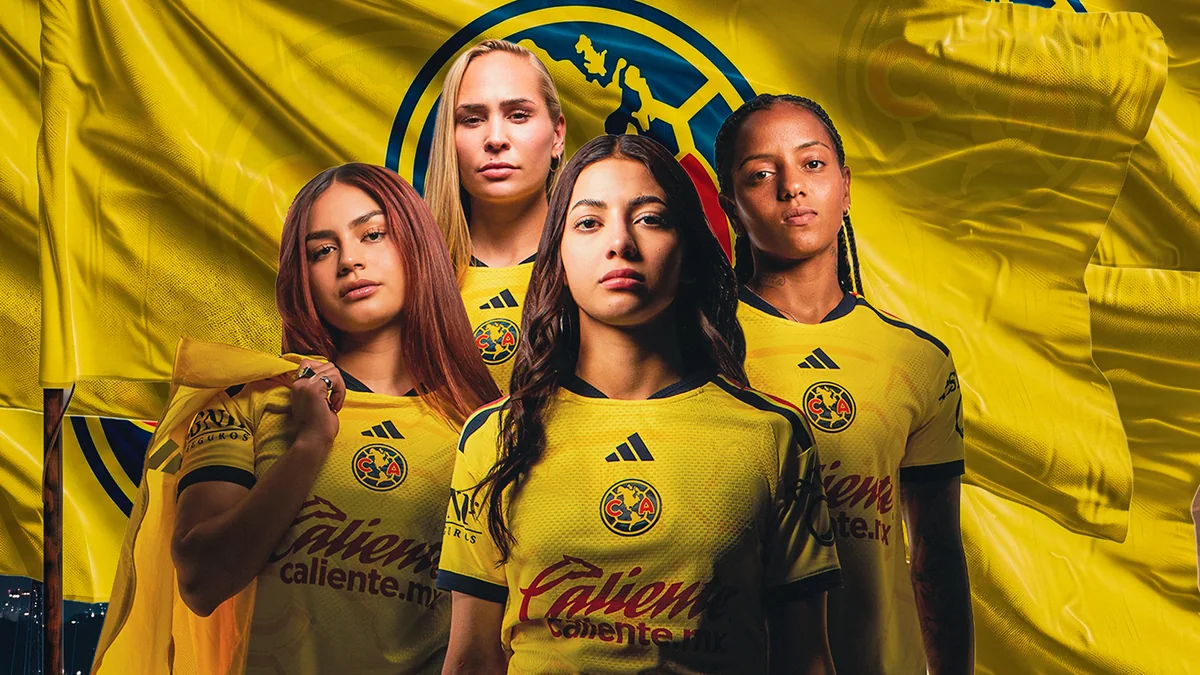
Three clubs approach 110 years from three different directions. América and Adidas revisit the visual confidence of Águilas shirts from the 1980s and 1990s. The vibrant yellow remains dominant, while the large front graphic is derived from the club crest and blue-and-red details complete the reference. It feels like an anniversary runway rather than a one-night costume, which makes sense for a collection introduced ahead of the club's October milestone.
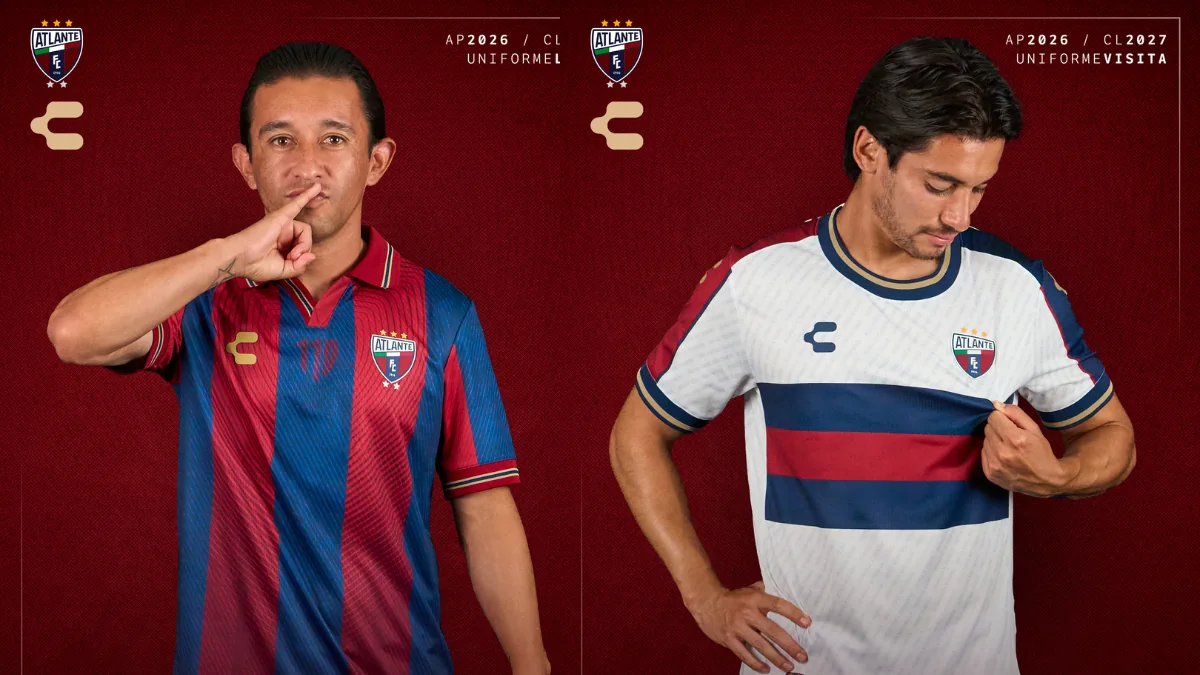
Atlas stays closer to the eternal rojinegro split. Gold finishing and an anniversary treatment elevate the red-and-black base without asking La Fiel to learn a new identity. Atlante has the most emotionally loaded brief: 110 years coincide with the Potros' return to Liga MX after 12 years away from the top division. Charly's blue-and-garnet home design serves both occasions, and its sponsor-free commemorative edition gives collectors a cleaner alternative to the match presentation.
That last distinction matters when shopping. A commemorative product may share the season's central idea while differing from what appears during league play. Read the exact listing rather than assuming every badge, sponsor and package is identical. For context on how these histories compare on the field, our guide to Liga MX's leading clubs separates current strength from long-term stature.
Stadiums, local landmarks and past champions shape the graphics
The most geographically specific shirt belongs to León. Charly builds the home concept around 60 years of Estadio León—the Nou Camp—and works a lion silhouette into tonal emerald lines. Pachuca looks beyond the stadium to Hidalgo: Skechers uses forms inspired by the Atlantes de Tula within the Tuzos' traditional blue-and-white structure. Neither idea requires abandoning the color code a supporter expects.
Querétaro turns civic architecture into a small design system. The Teatro de la República informs the home graphic, baroque architecture shapes the away concept, and a pattern derived from the city's aqueduct joins the collection. Puebla takes a more supporter-facing route with geometry inspired by “Mascarita,” the masked fan associated with La Franja, while preserving the diagonal band that makes Puebla recognizable.
Toluca's reference travels through time rather than place. The New Balance home shirt's classic red presentation nods to the champion teams of 1999 and 2000, a period that still defines the modern Diablos imagination. These concepts reveal a useful test for any jersey: if you removed the marketing copy, would the detail still lead a curious fan back to the club, its city or its people? The best 2026-27 designs can answer yes.
Chivas and Pumas lead the biggest manufacturer changes
Chivas moving to Nike and Pumas reuniting with PUMA are the two supplier switches most likely to be noticed outside Mexico. Both pair a global manufacturer with one of the league's most recognizable shirt identities. Crucially, neither launch throws away the club's visual inheritance: Chivas still begins with red stripes, and Pumas still builds around the giant feline mark.
The moves are major, but they do not tell the whole commercial story. Eight of the 18 top-flight clubs are supplied by Charly, Pirma or Voit. Liga MX therefore remains a competition where Mexican sportswear companies shape nearly half the home shirts, rather than a shop window controlled only by the largest international labels.
Nike begins a new Chivas era with five red stripes
Nike became Chivas's exclusive sports sponsor and supplier after the club closed a ten-year period with PUMA. The agreement goes much deeper than the men's first-team shirt: it covers the women's side, academy, esports team, technical staff, training wear and travel apparel. That scope makes 2026-27 the start of an ecosystem, not a one-season logo swap.
The first home jersey is deliberately conservative in the best sense. Five red stripes sit on white, the crest occupies its familiar side of the chest, and a polo collar gives the shirt a classic frame. Nike says the match construction uses Aero-FIT, with knitted airflow zones intended to move heat and moisture away during competition. A retail buyer should still read the product title carefully: the technology described for players does not mean every lower-priced “Stadium” listing has identical construction.
For the supporter, continuity is the point. The swoosh adds novelty, but it cannot be the main character on a Chivas home shirt. Follow the 2026-27 Chivas schedule to see how the new collection reads in different stadiums and broadcast lighting, where shade and sponsor contrast can look different from a studio image.
Pumas reunites with PUMA while other Mexican brands hold ground
Pumas's change carries an irresistible name match, but the reunion is grounded in club memory. PUMA officially returned as supplier for 2026-27 after Pumas had worn Nike. The deep-blue home shirt places the gold puma front and center, while the collection includes home, away and goalkeeper products for men, women and children. The club also highlighted dedicated Pumas Femenil designs and lists both on-field and stadium versions with dryCELL moisture-management technology.
That breadth should help fans find a version that fits how they actually wear a jersey. It also contrasts with the more fragmented availability of smaller suppliers. Yet “smaller” does not mean marginal inside Liga MX. Charly's five clubs range from historic Atlante and Atlas to León and Santos; Pirma supplies Cruz Azul and Puebla; Voit takes Necaxa. Together they account for eight home shirts and give the league local manufacturing character that a Nike-versus-PUMA headline can easily hide.
A manufacturer's prestige is not a guarantee that its shirt is the right buy. Judge the actual version, sizing, design and official sales route. The Pumas schedule offers the same useful reality check: a kit earns its identity through repeated match use, not through a launch-day logo reveal.
Buy through official club and brand channels, then check the exact listing
The safest way to buy a 2026-27 Liga MX jersey is to begin at the club's official launch announcement, follow its store or manufacturer link, and confirm the season on the individual product page. The Liga MX store is a useful second starting point, but no single shop should be assumed to carry all 18 clubs, every cut and every size at the same time.
Do not let a polished product photo replace basic verification. Match the club, season, manufacturer, product code, color, version and seller before paying. If a listing offers customization, determine whether the name set, Liga MX patch and sponsor applications are official options or third-party additions—and remember that personalized products often have tighter return rules.
Start with the club, manufacturer or Liga MX store
- Open the official club website. Find the 2026-27 kit announcement or the store link in the club navigation; avoid trusting a search ad merely because the domain contains a team name.
- Follow the named retail partner. América directs buyers to AmeShop and Adidas; Chivas identifies Nike and Tienda Chivas; Pumas names PUMA, Tienda Pumas and authorized retailers; Charly sells its Atlante product directly.
- Use the official Liga MX store as a cross-check. It can confirm current products, but “sold out” or a missing club is a stock result—not proof that the shirt does not exist.
- Read the SKU page, not just the collection tile. Check 2026-27 in the title, available cut and sizes, manufacturer item number, included patches, material, delivery estimate and return terms.
This route also helps when similar shirts coexist. América has adult, youth and long-sleeve listings; Pumas describes on-field and stadium versions; Atlante has a sponsor-free anniversary edition. All can be legitimate products, but they are not interchangeable. Save the product-page receipt and screenshots of the description in case the delivered version does not match.
U.S. buyers should check region, duties, stock and returns
For a supporter in the United States, the first question is not “Does the Mexico store load?” but “Will this exact item ship to my ZIP code?” Check the country selector, currency and delivery address before investing time in customization. A domestic official brand storefront—such as a U.S. PUMA listing for Pumas—can simplify delivery and returns, although its range may differ from the Mexican shop.
If the jersey must come from Mexico, calculate the landed cost: shirt, customization, shipping, applicable duty or tax, carrier clearance fees and the cost of a possible return. U.S. Customs and Border Protection advises online buyers that they become the importer and that shipping charges do not necessarily include customs or brokerage costs. Current CBP guidance also means shoppers should not assume a low-value parcel will automatically arrive duty-free. Ask the seller which carrier is used and who pays fees before dispatch.
- RegionDoes the seller accept your U.S. address and payment method?
- Final costAre duties, tax and carrier fees prepaid or collected later?
- ReturnsWhere must the item go, and are customized shirts excluded?
- TimingIs the size truly in stock, and is tracking included?
Once the shirt arrives, make it part of match day: the Liga MX TV schedule helps you find the next chance to see its on-field counterpart.
Choose the right jersey version and spot counterfeit risk before paying
Choose by use, not by the most impressive label. A stadium or fan jersey is usually the sensible match-day and everyday option; a player-oriented version suits buyers who value lighter technical construction and a closer fit; a commemorative edition makes sense when its story, finish or packaging is the attraction. All three can be official.
That last point clears up a common trap: on an official product page, “replica” often means a genuine fan version inspired by the professional shirt. It does not automatically mean fake. Counterfeit describes an unauthorized product that misuses club or manufacturer marks. The seller, product code and official comparison page tell you more than one ambiguous word in the title.
Player, stadium and commemorative editions can differ
Player-oriented
Closest to performance construction, often slimmer and lighter, with advanced ventilation or heat-transfer details. Chivas describes Aero-FIT in its new match kit. Try on if possible and never assume your usual casual-shirt size.
Stadium or fan
Official supporter product designed around the same visual identity, commonly with a more forgiving construction and price. Nike's current Chivas listing explicitly calls its Stadium jersey a Dri-FIT “Replica”—a legitimate retail category.
Commemorative
Built around an anniversary or event and potentially different from the match shirt. Atlante's 110-year Charly edition is sponsor-free, regular fit and boxed, with a silicone embroidered crest and its own fabric technologies.
Pumas shows why shoppers must compare brand language. The club says both on-field and stadium versions are offered and identifies dryCELL plus recycled materials, but that does not make PUMA's tier names identical to Nike's or Adidas's. For every club, compare chest width, garment length, fit description, crest application, sponsor treatment and product code on the exact page. If you plan to play in the shirt, prioritize movement and ventilation; if you plan to wear it over a layer in the stands, allow room accordingly.
Use a five-point authenticity and care check
- 1. Verify the place. Buy from the club, manufacturer or a retailer named by them. A marketplace seller should provide a real business identity, contact route, return policy and original proof—not only perfect reviews or copied studio pictures.
- 2. Test the price. A discount on an older size is plausible; a newly released player version at a tiny fraction of the official price is a warning. The USPTO's consumer guidance treats an implausible price as one of the clearest counterfeit signals.
- 3. Match the product code. Compare the hang tag and sewn label with the manufacturer SKU on an official page. The club, season, color and version should resolve to the same product, not a different team or generic template.
- 4. Compare marks and packaging. Check spelling, crest proportions, manufacturer logo, sponsor alignment, print quality and included packaging against official photographs. One loose thread proves little; a cluster of wrong fonts, peeling marks and mismatched codes is much more meaningful.
- 5. Preserve the evidence and the shirt. Keep the receipt and listing. Follow the sewn care label first; as a cautious default for polyester shirts with heat-applied graphics, turn the jersey inside out, avoid unapproved high heat and do not iron directly over badges, names or sponsors.
If an imported listing openly presents an unauthorized copy, low price does not make the risk disappear: U.S. Customs and Border Protection warns that counterfeit imports can be seized. Buy the version you can verify, care for it according to its own label, and then judge it where a football shirt belongs—alongside the club during the next Liga MX match.
Comments
Comments are reviewed before publication.
Sign in with Google to comment. Spam, abusive content, personal information and policy-violating links are not published.
Sign in with Google to comment or reply.
Loading comments…